9/26/2026
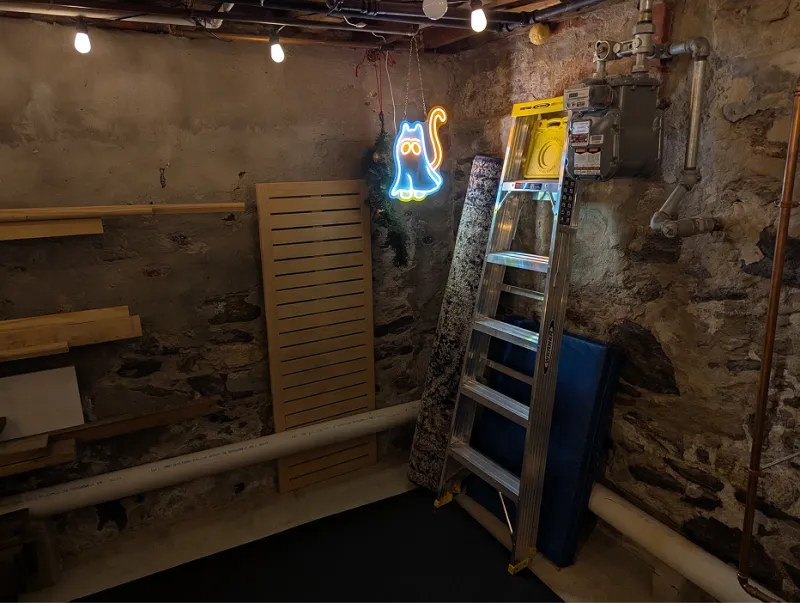
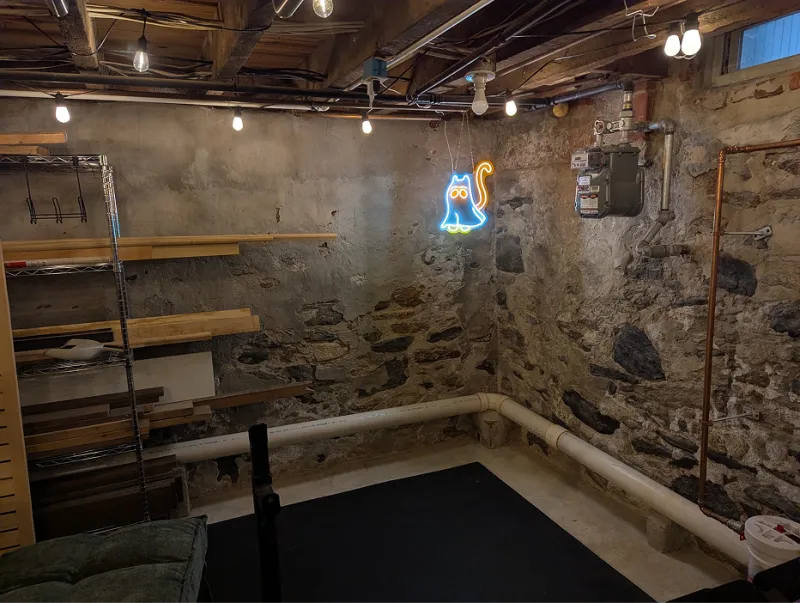
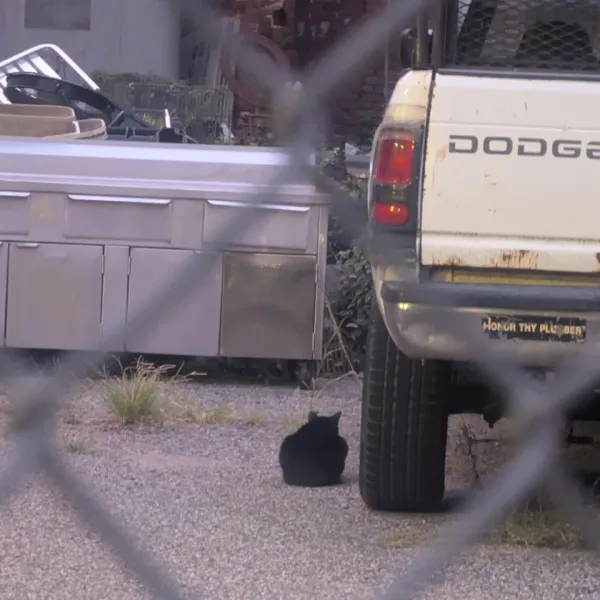
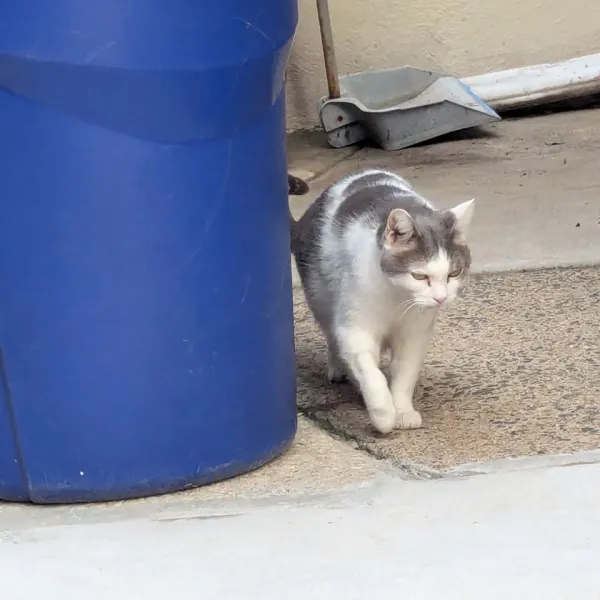
Look at these quality Philly street cats. Also, I split off the projects tab.
9/26/2026
Look at these quality Philly street cats. Also, I split off the projects tab.
9/23/2026
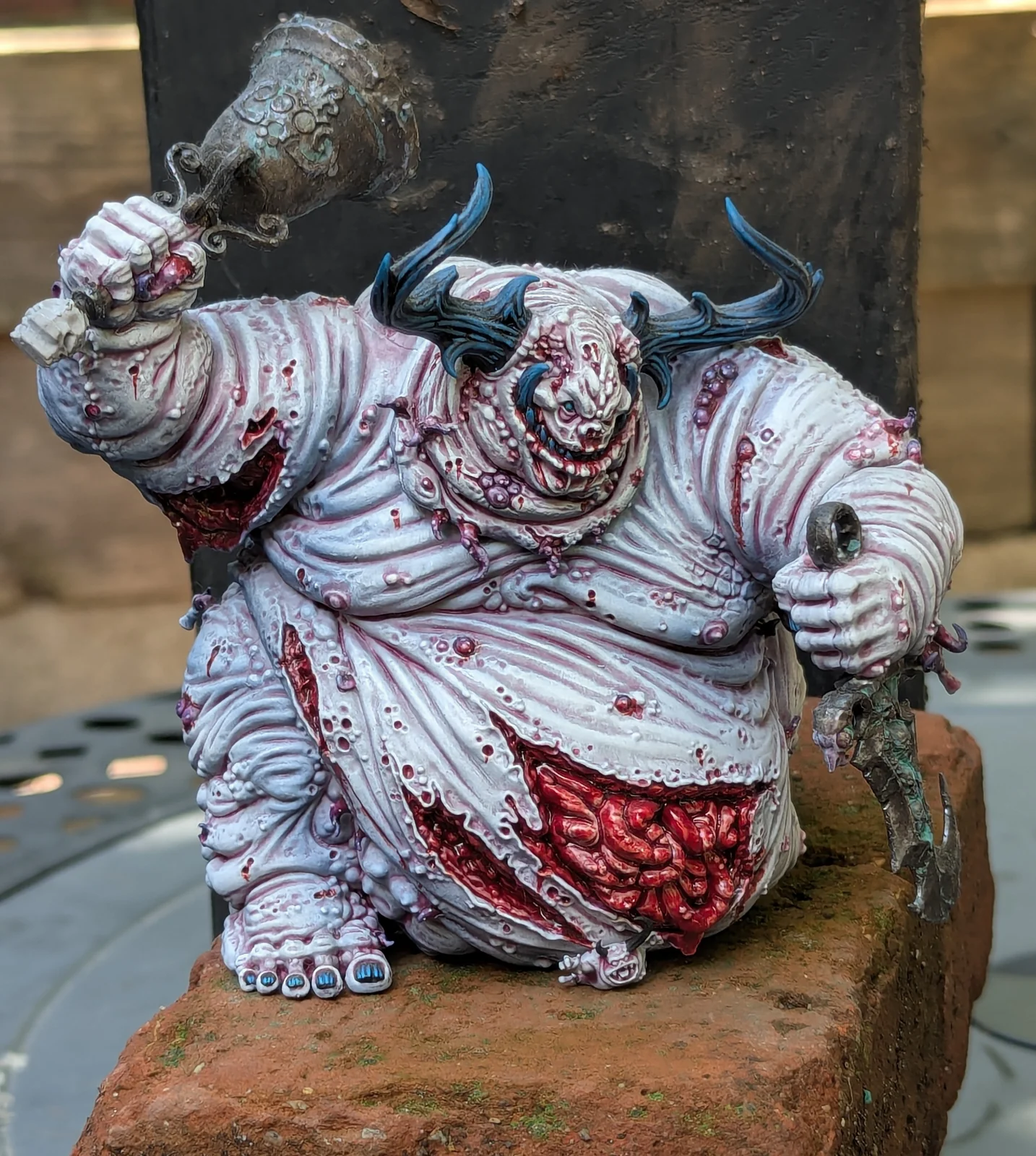
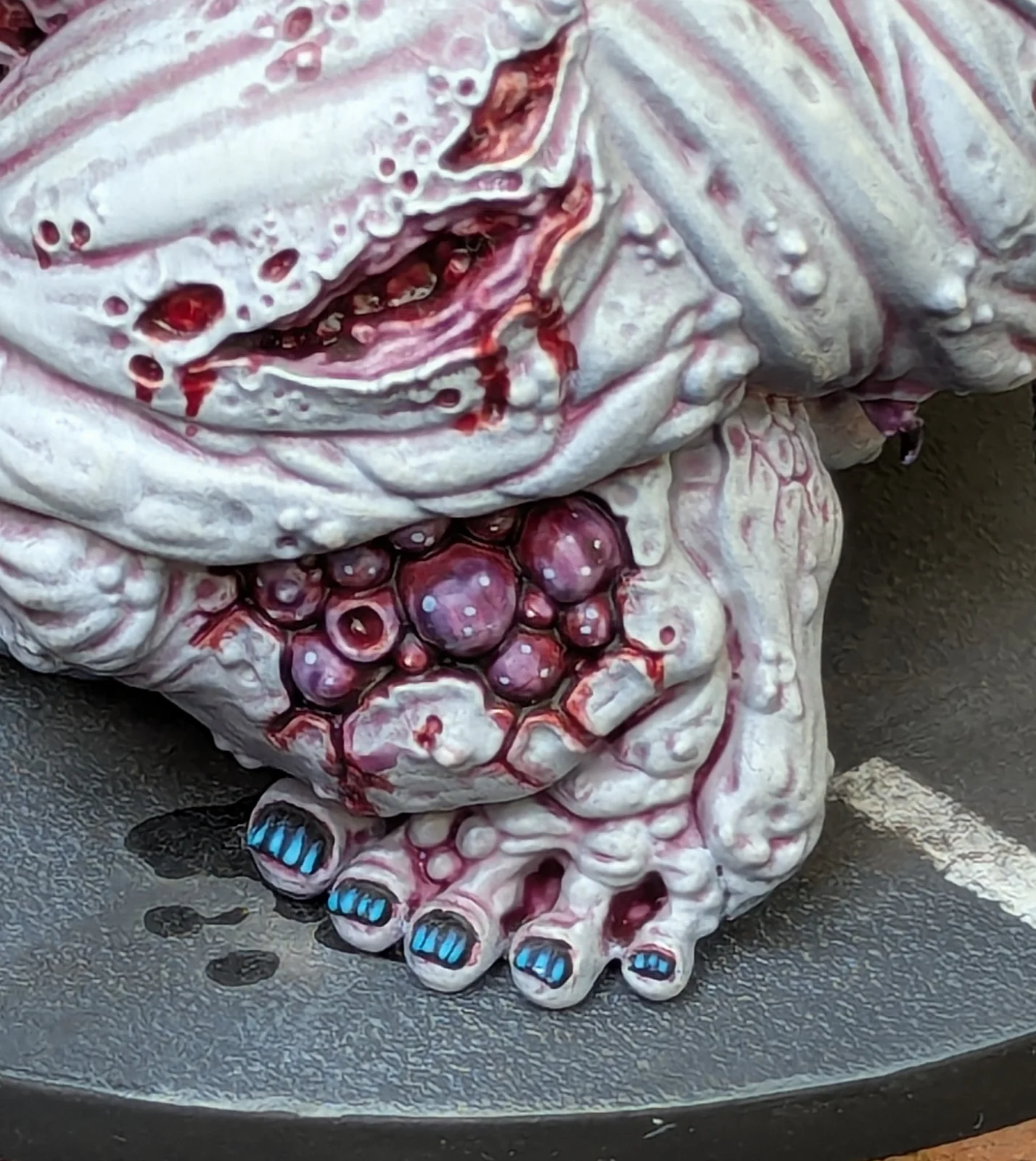
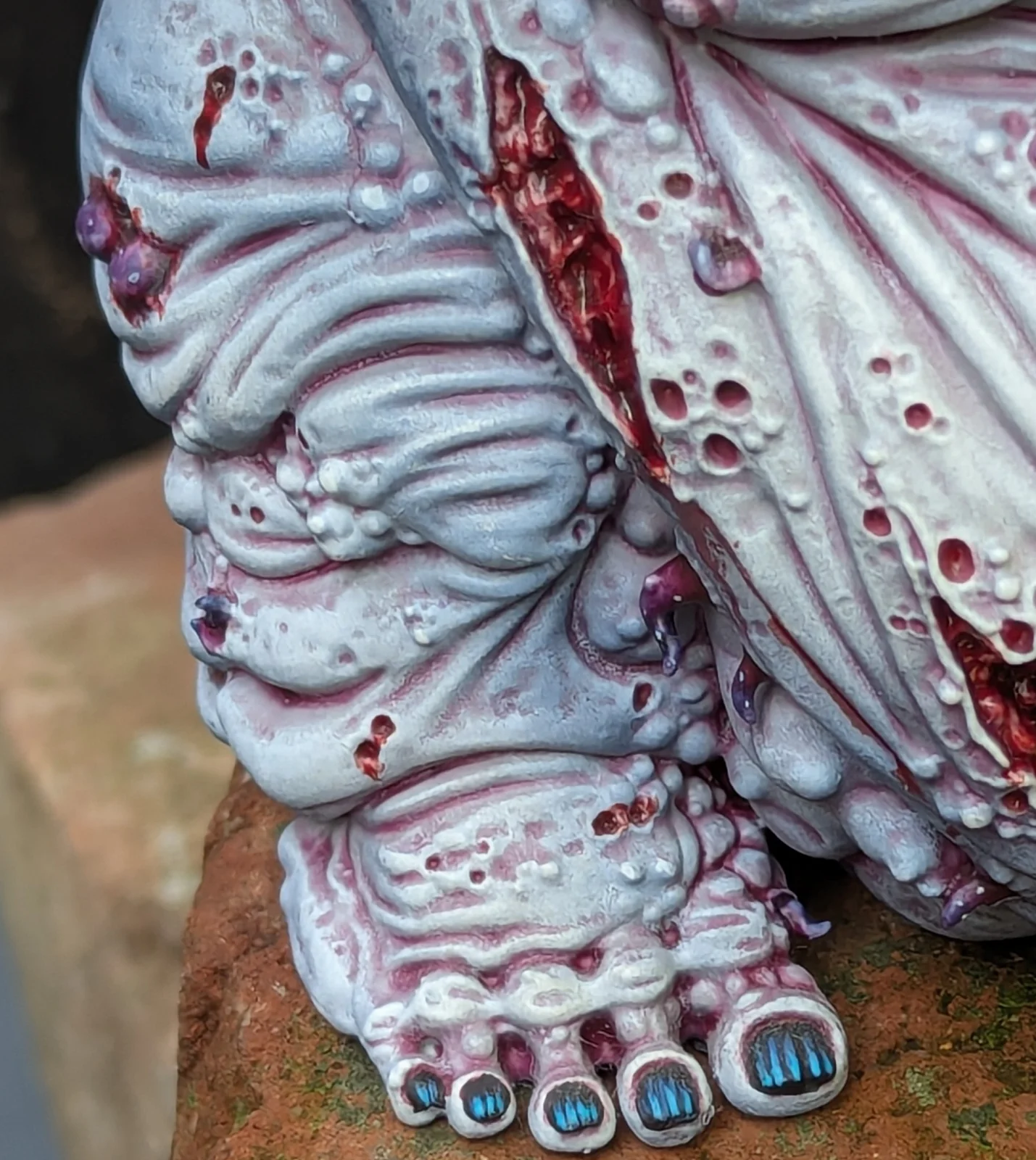
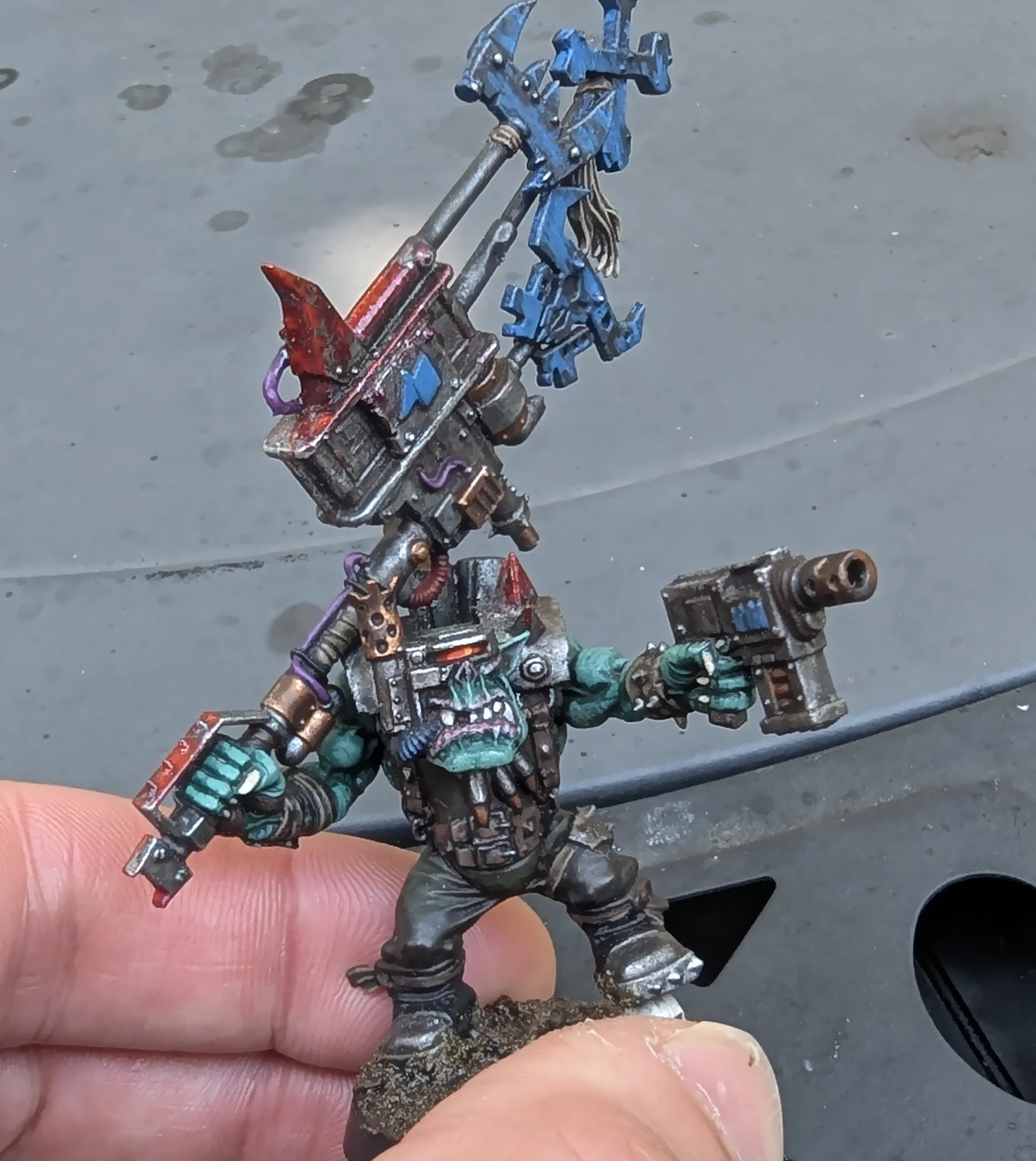
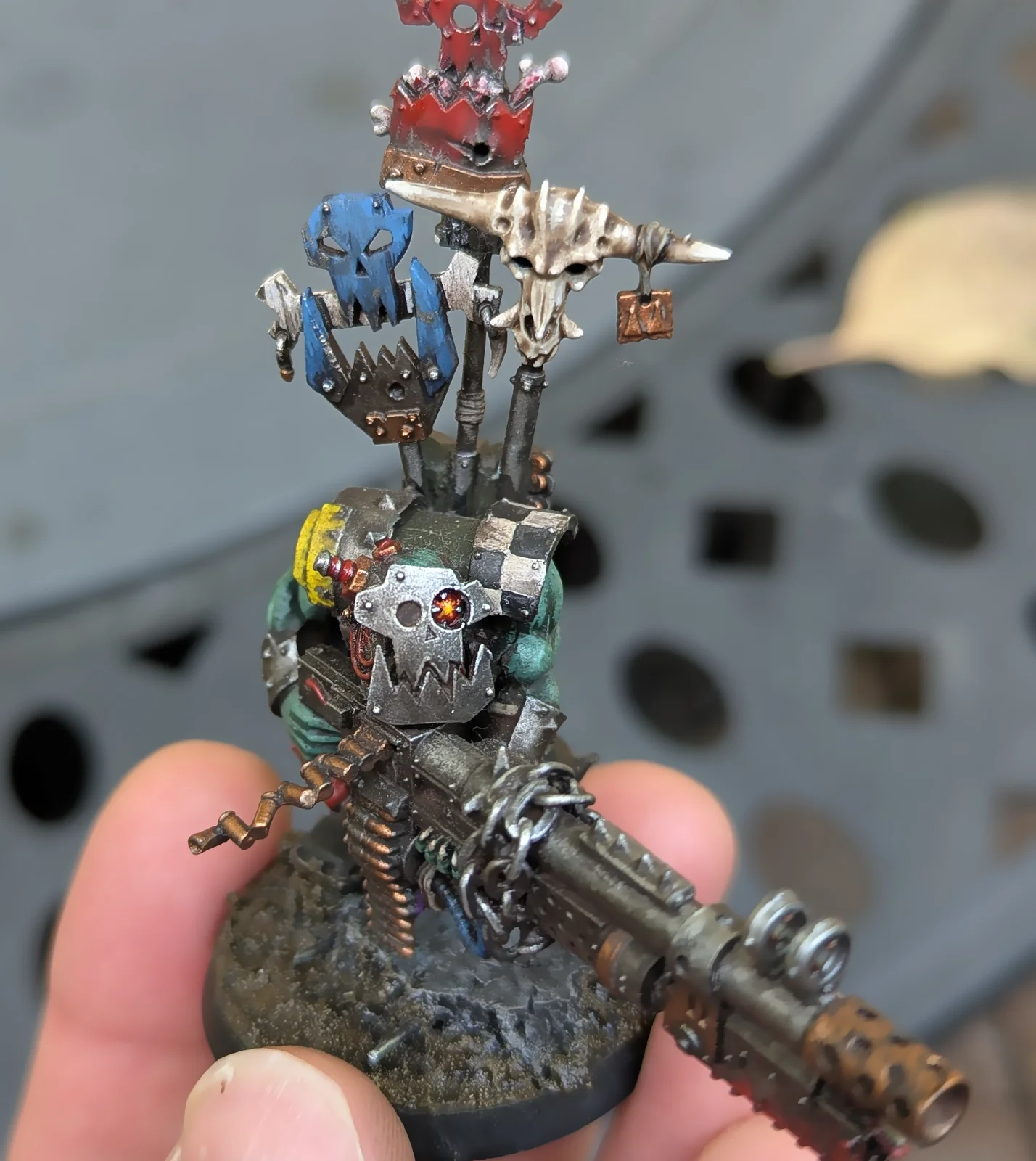
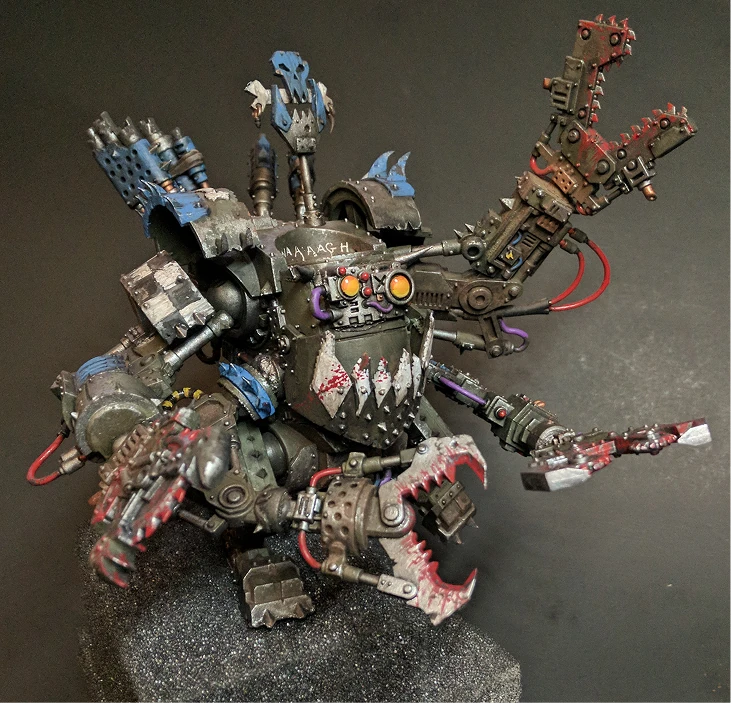
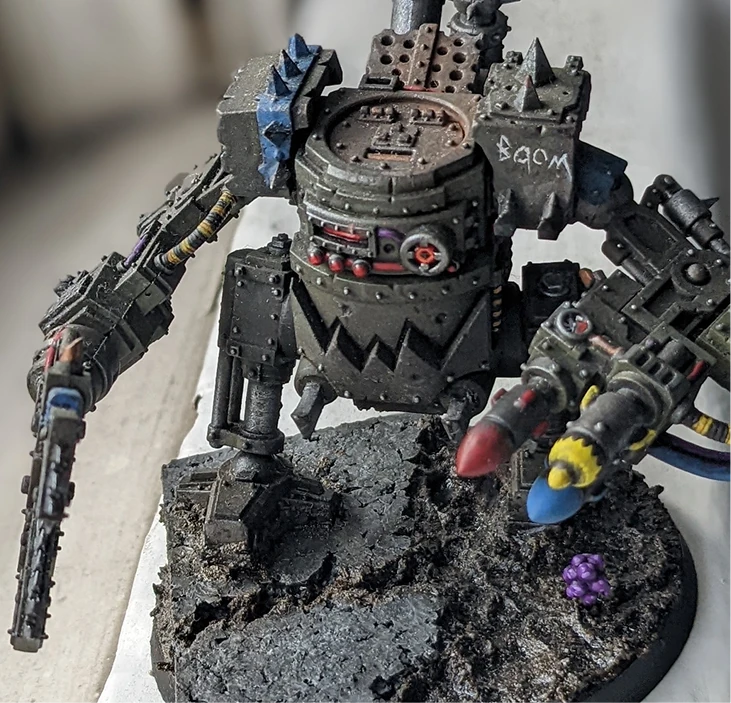
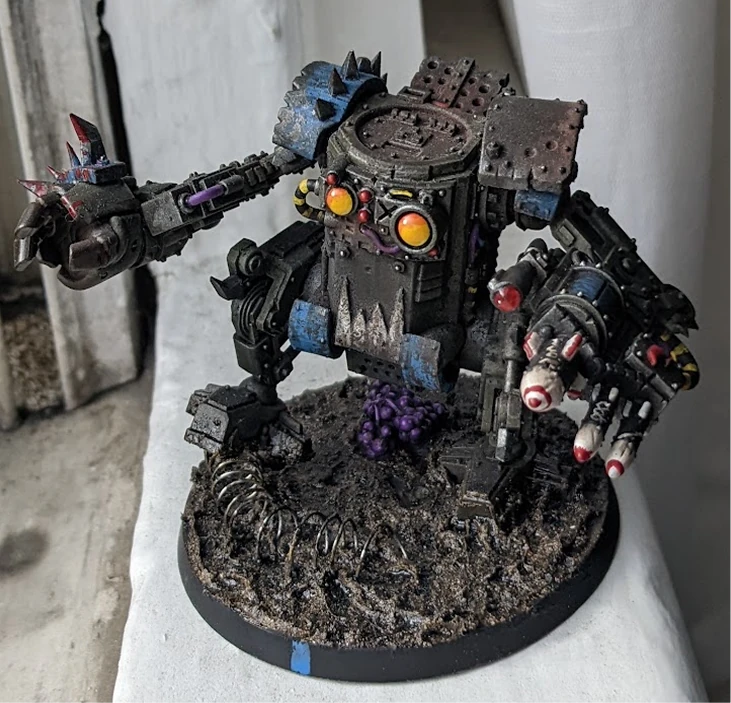
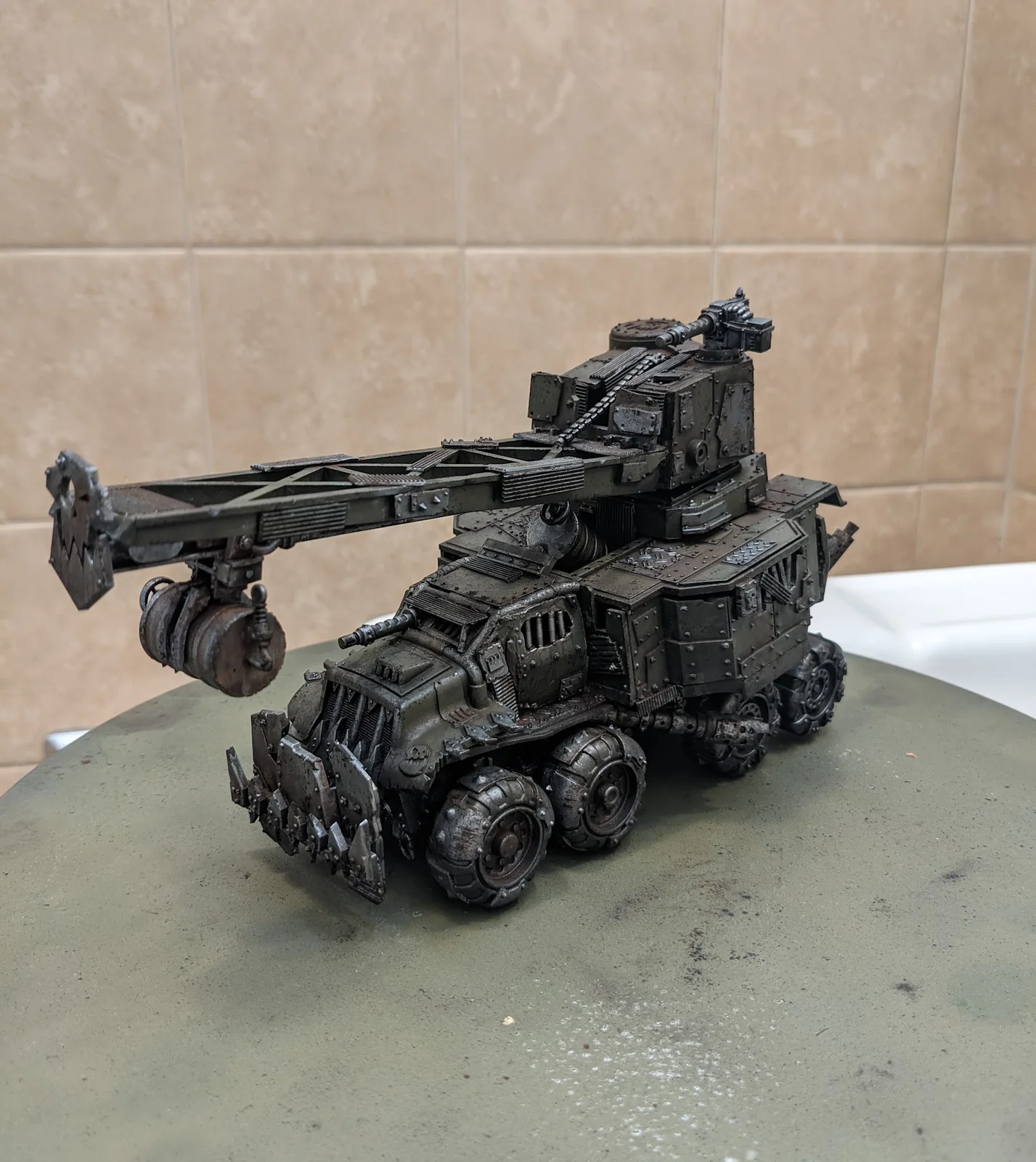
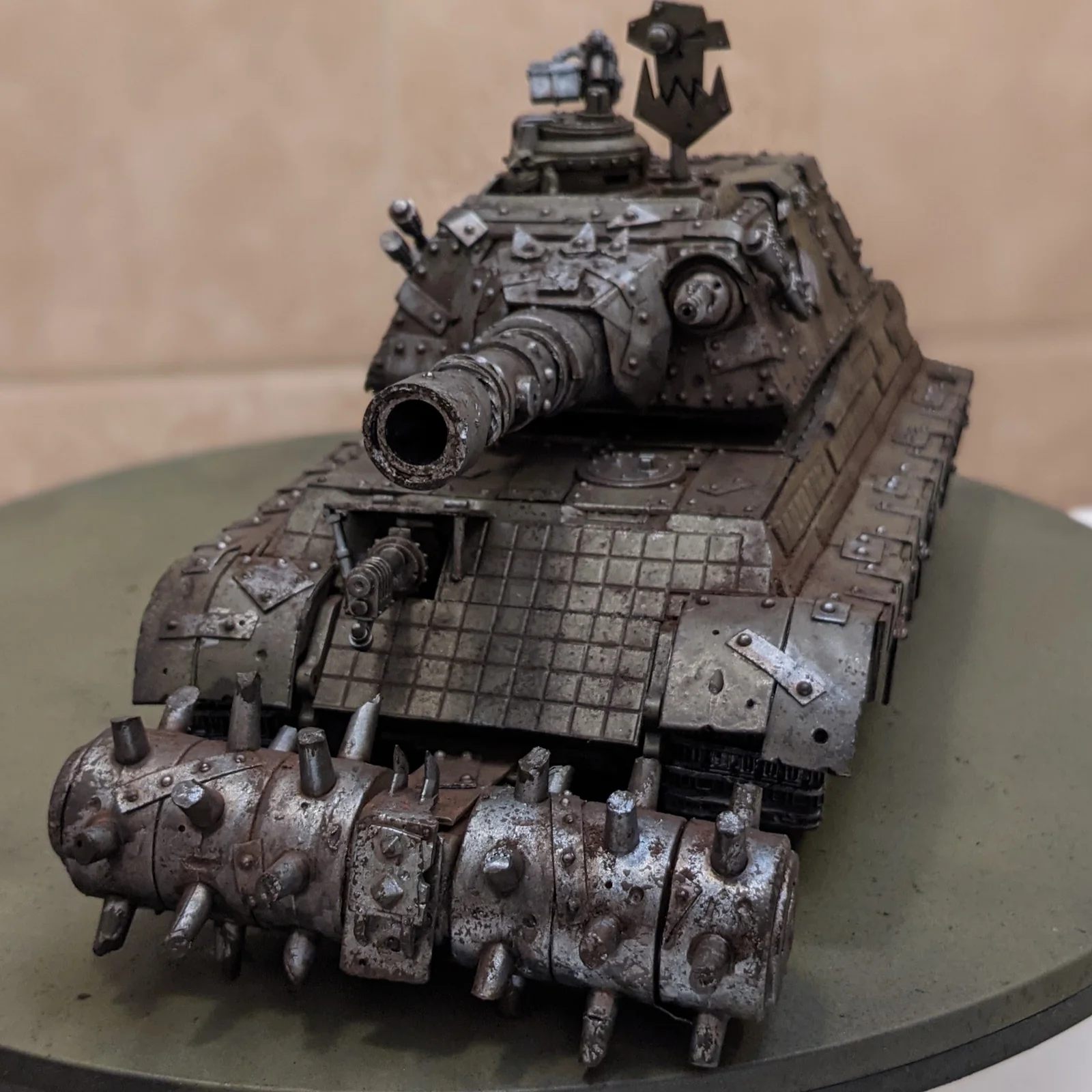
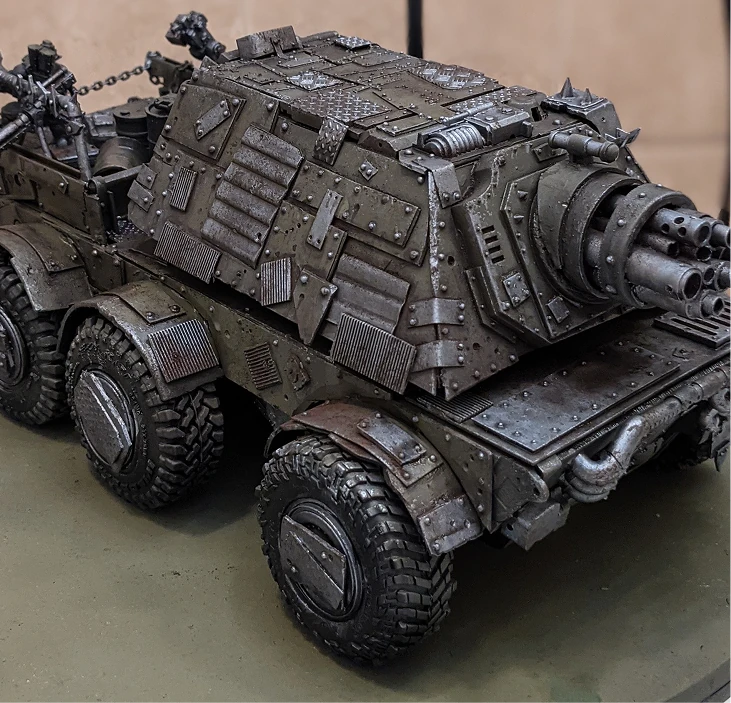
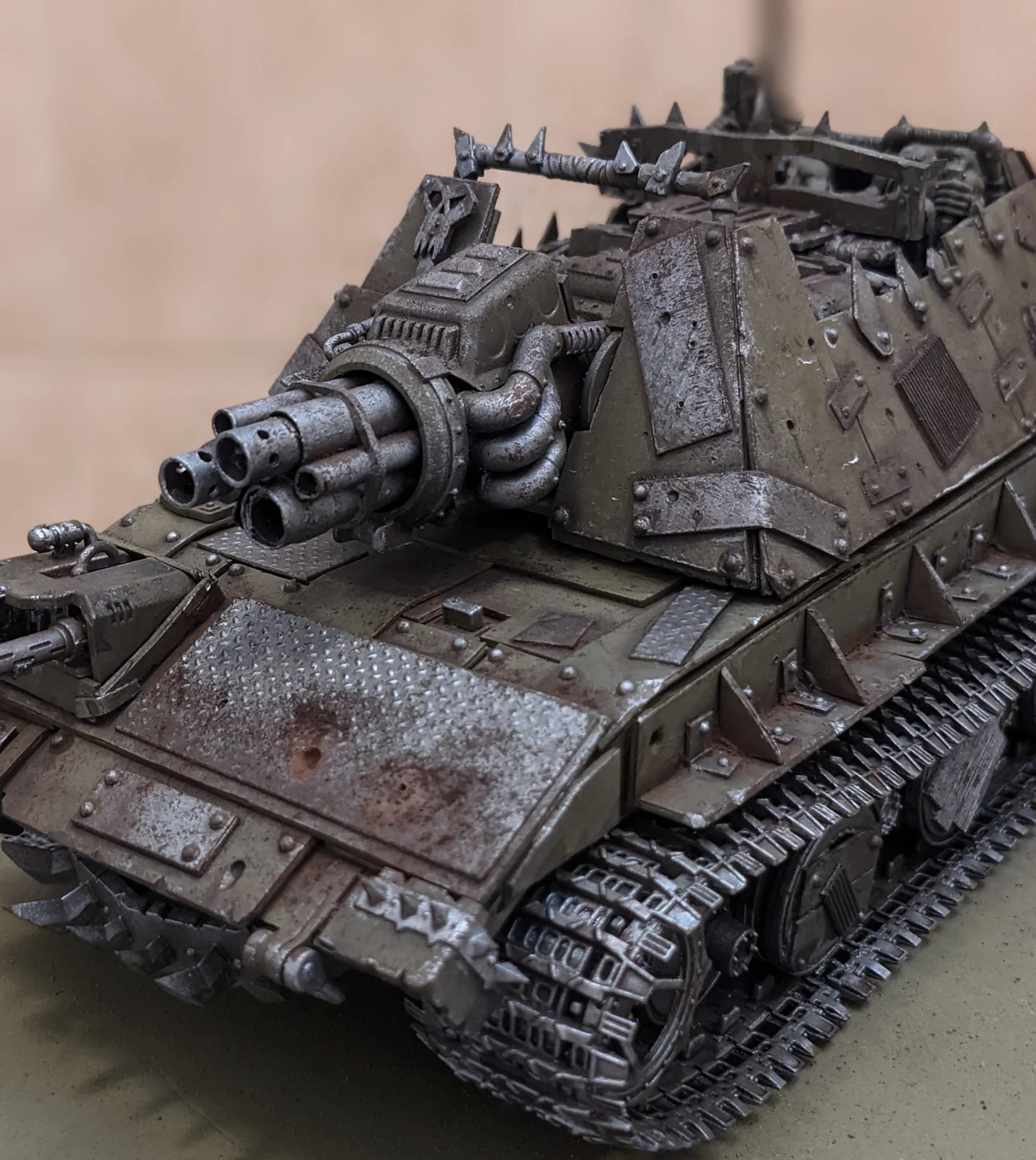
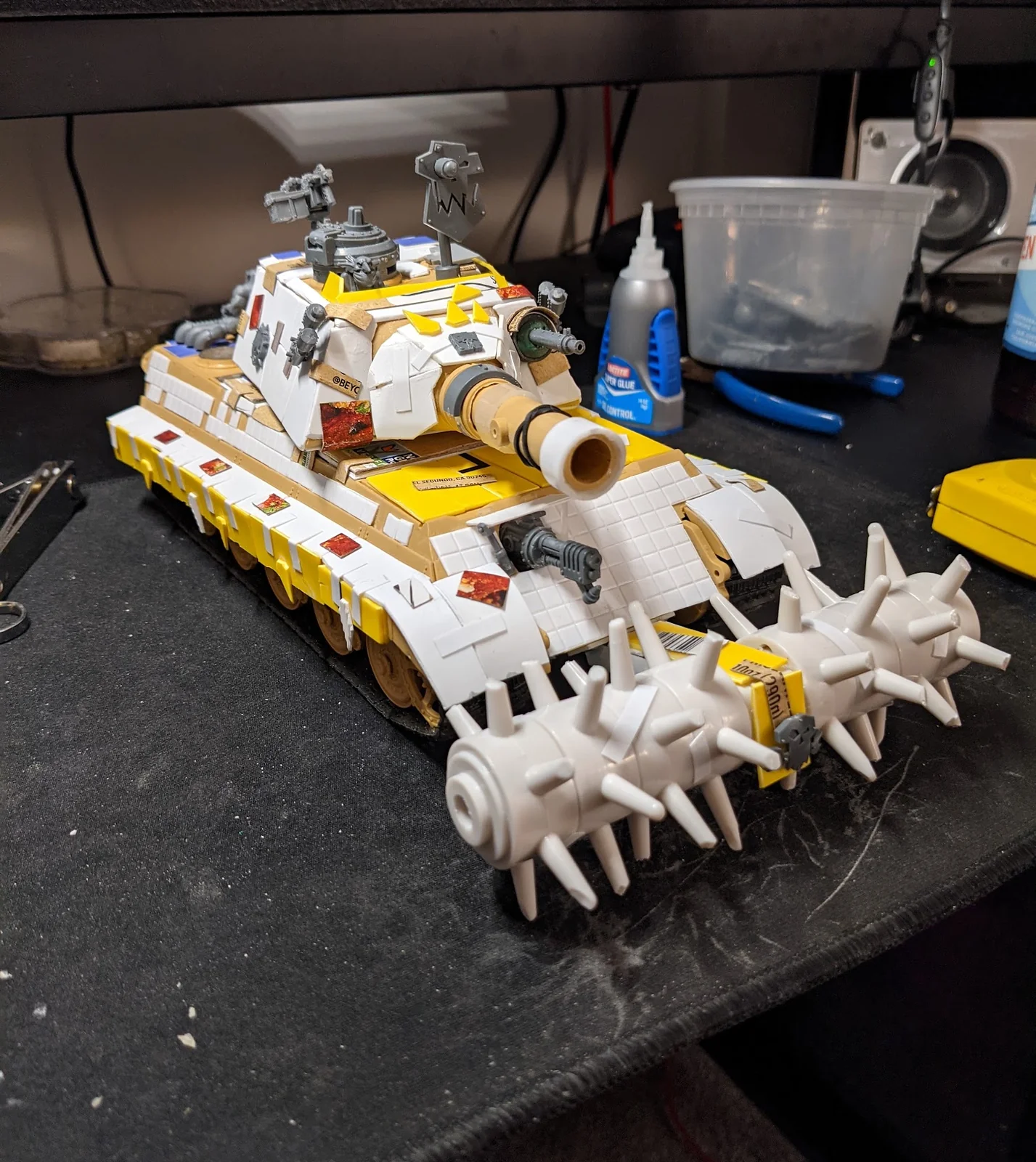
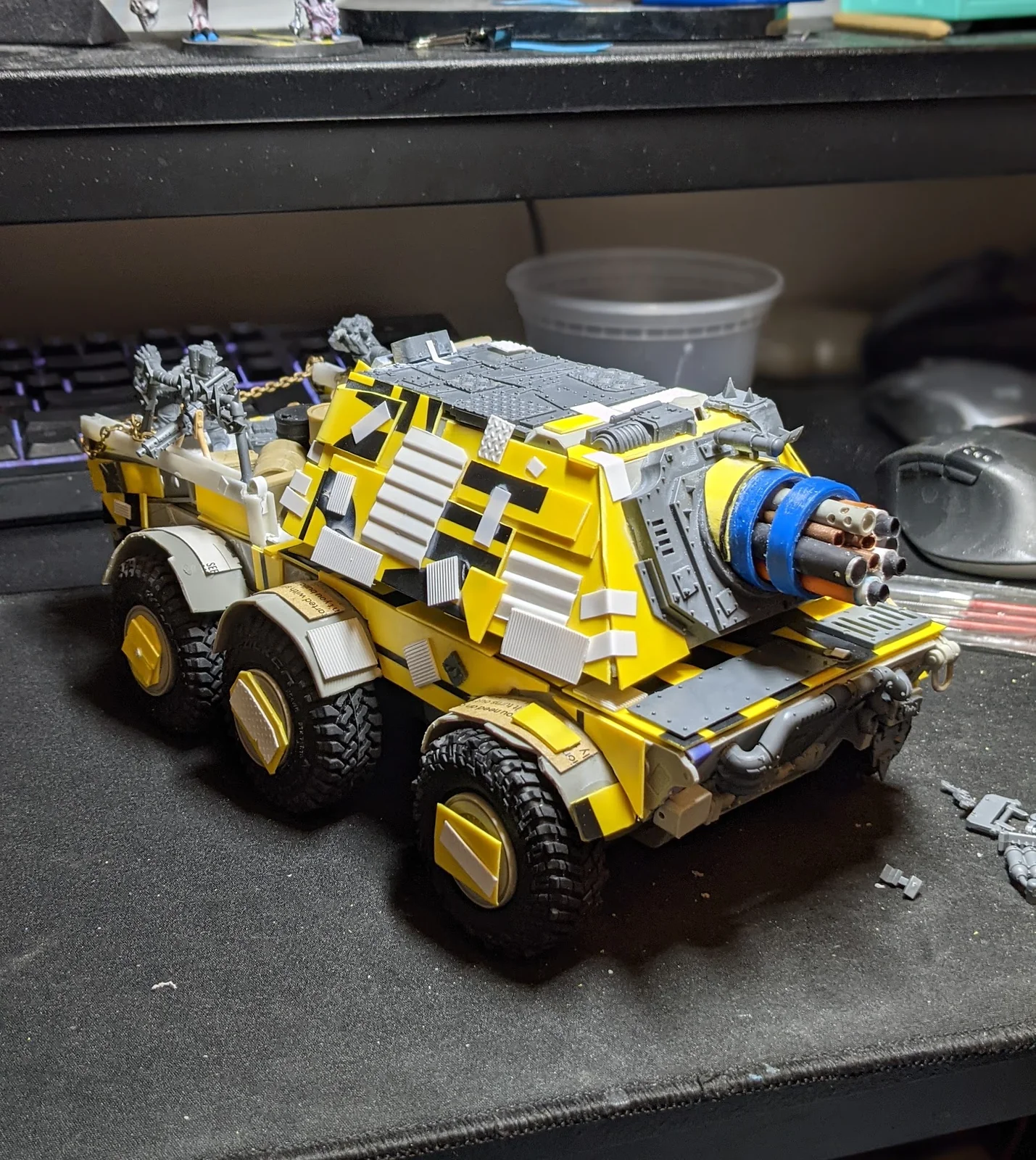
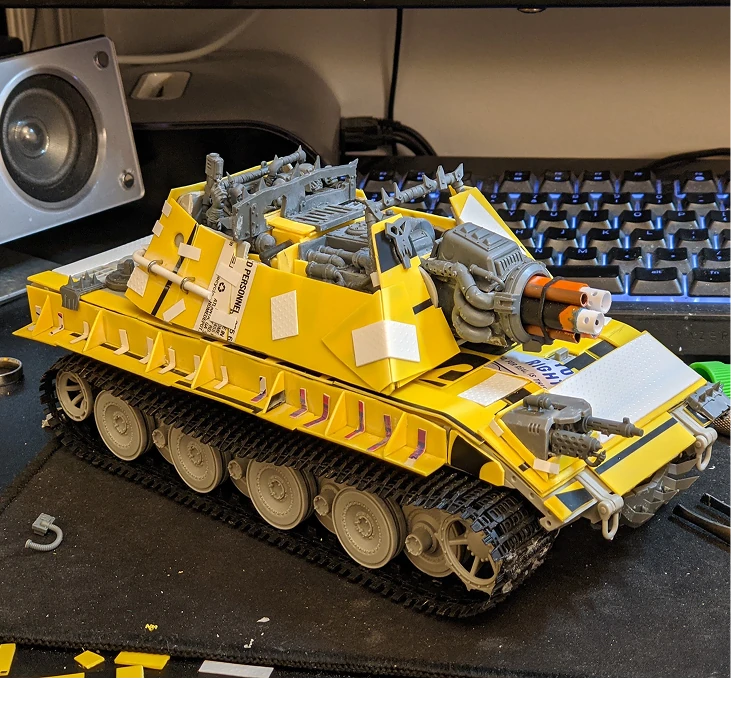
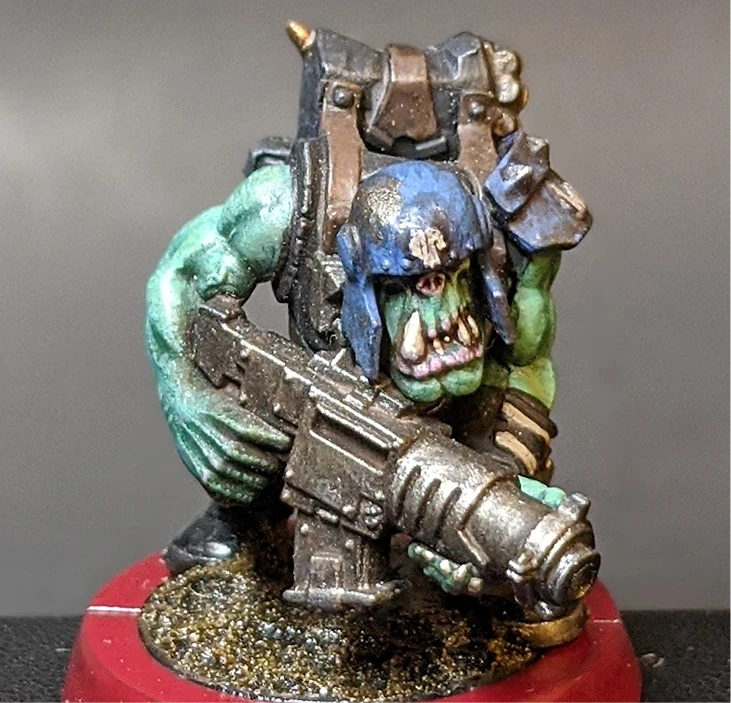
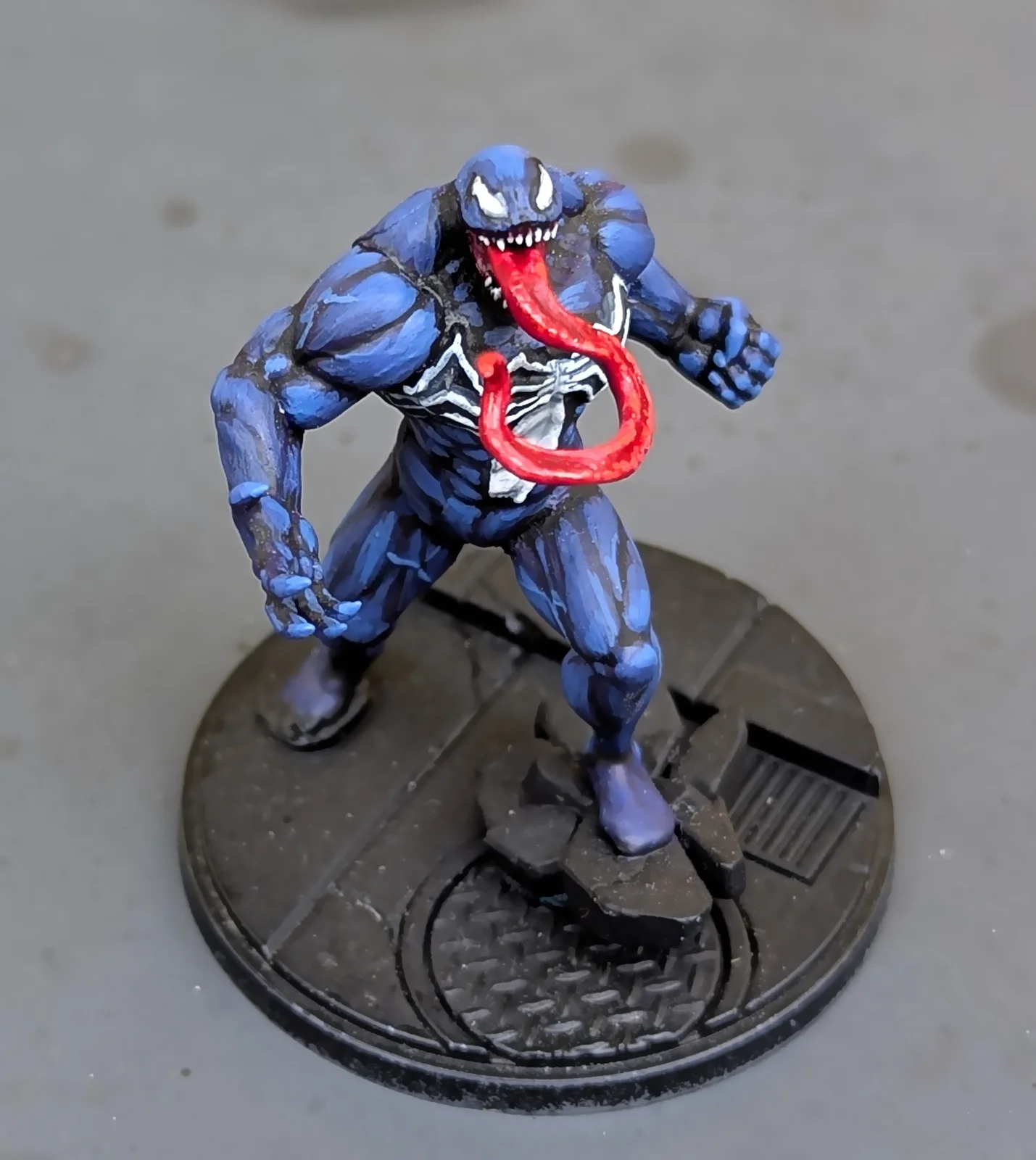
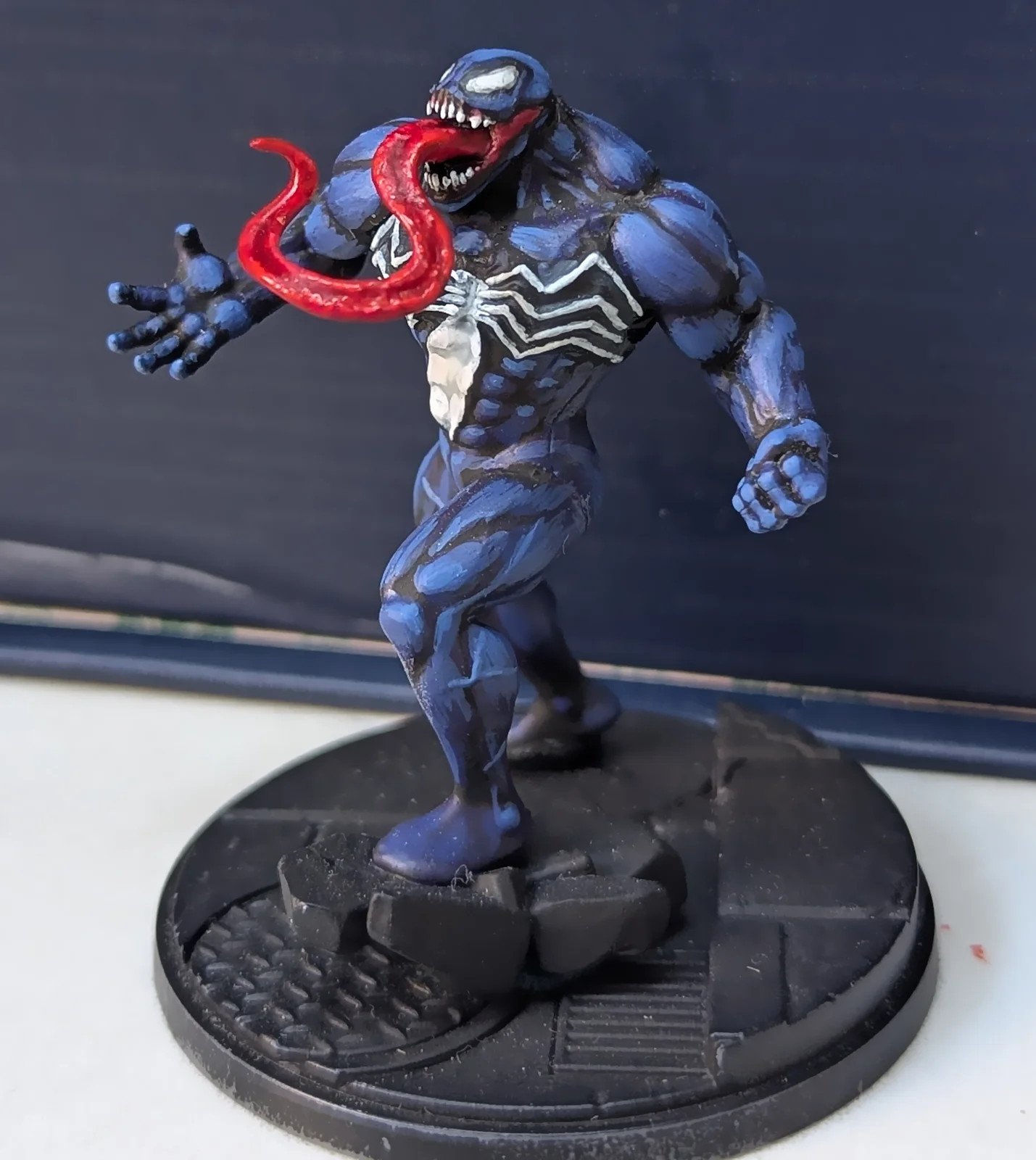
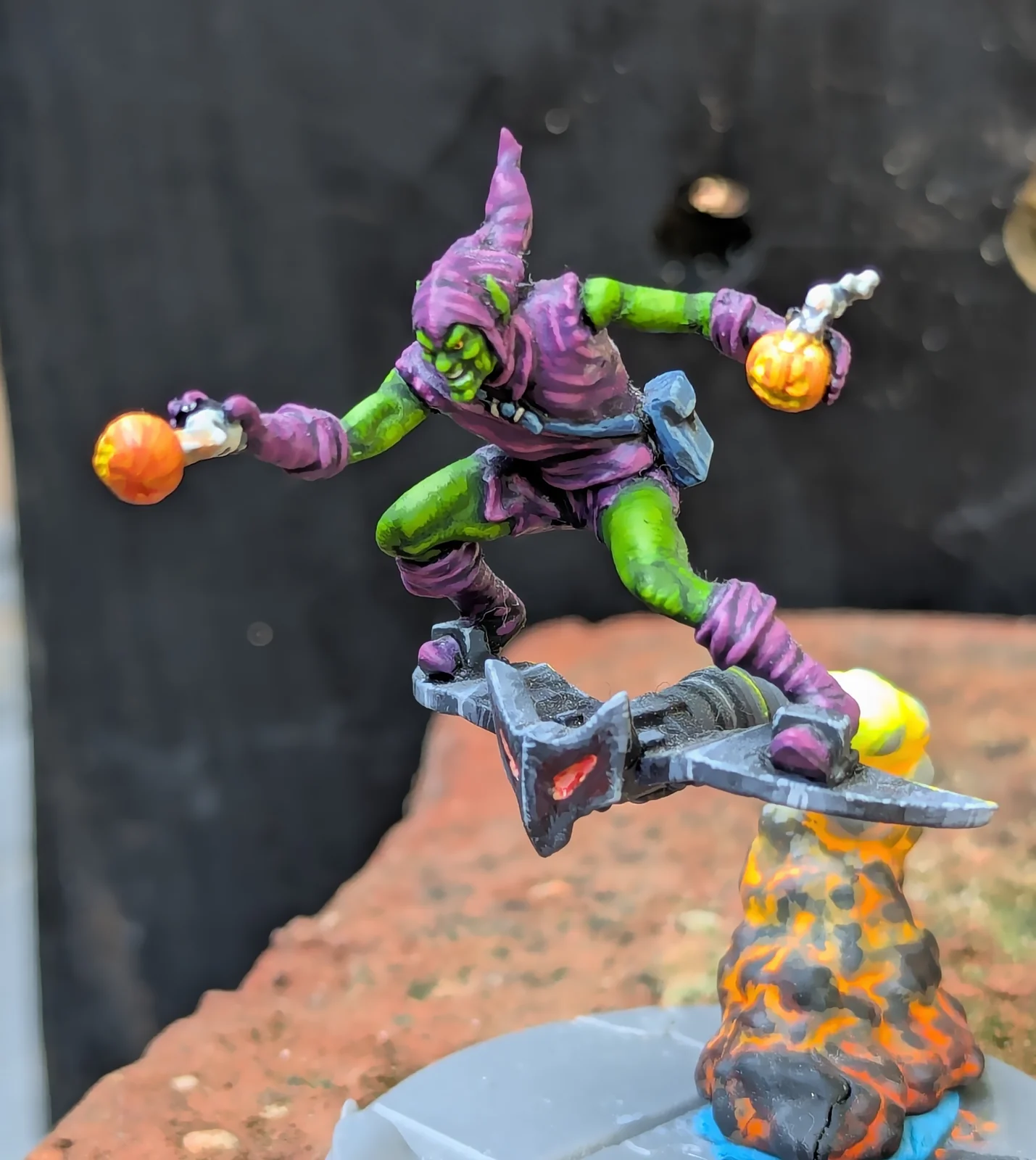
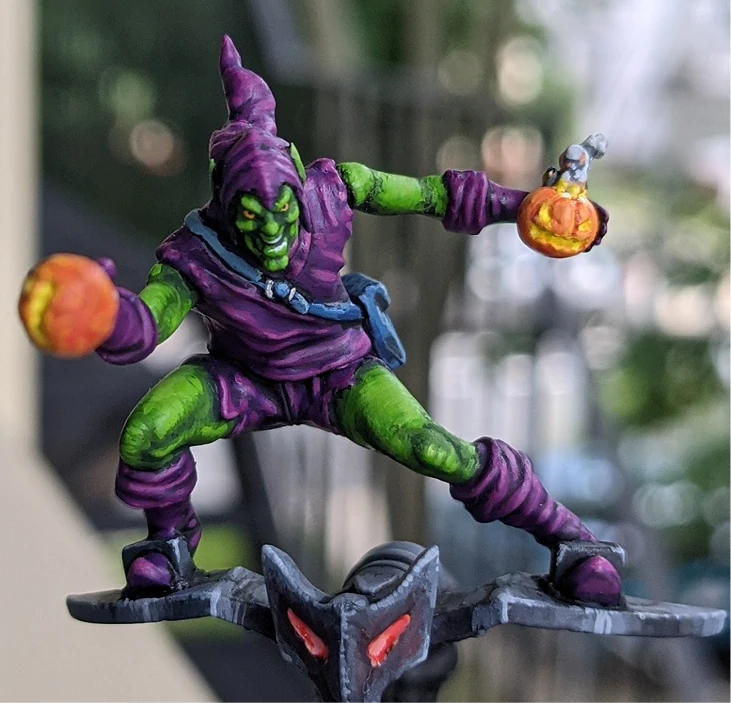
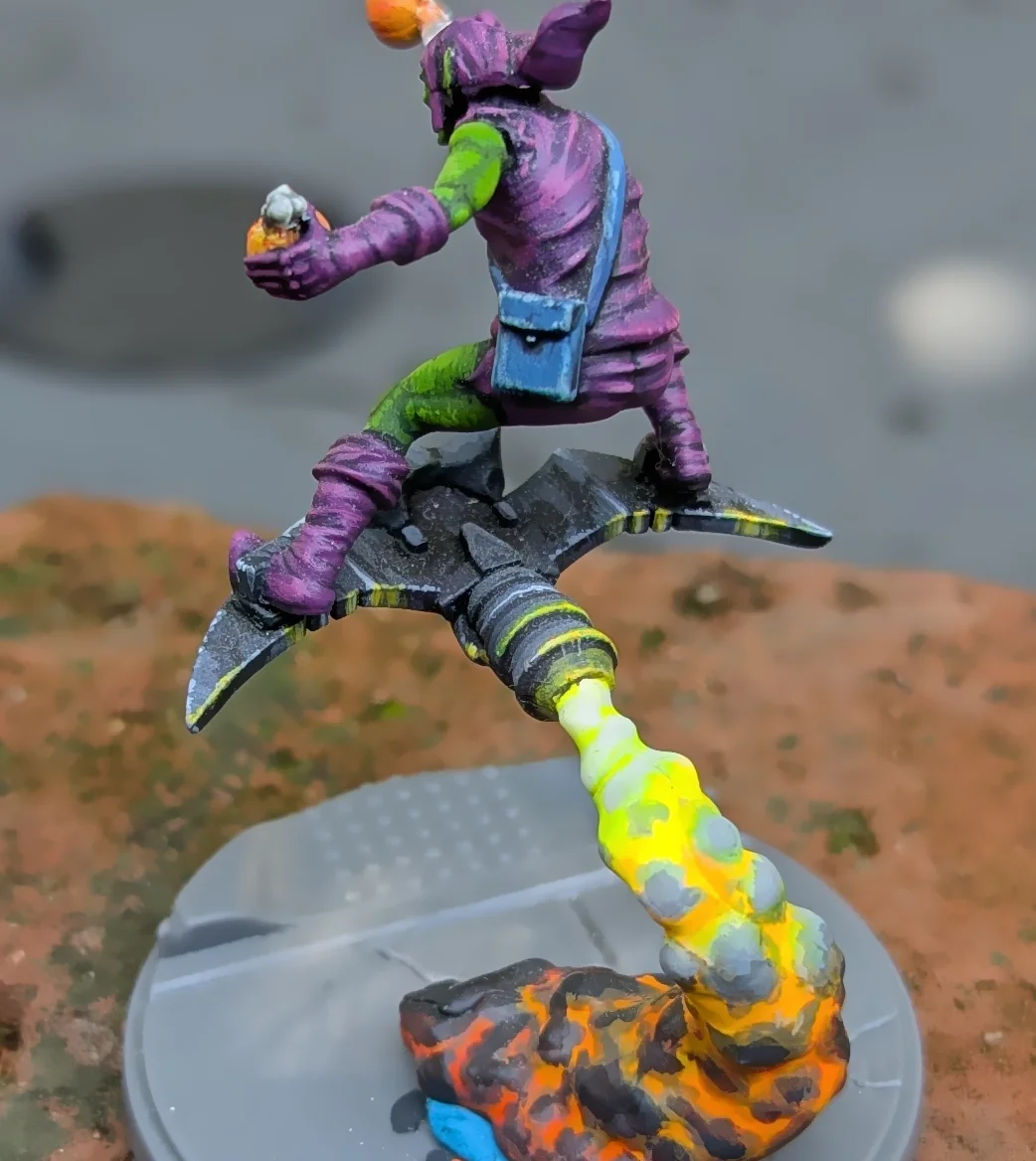
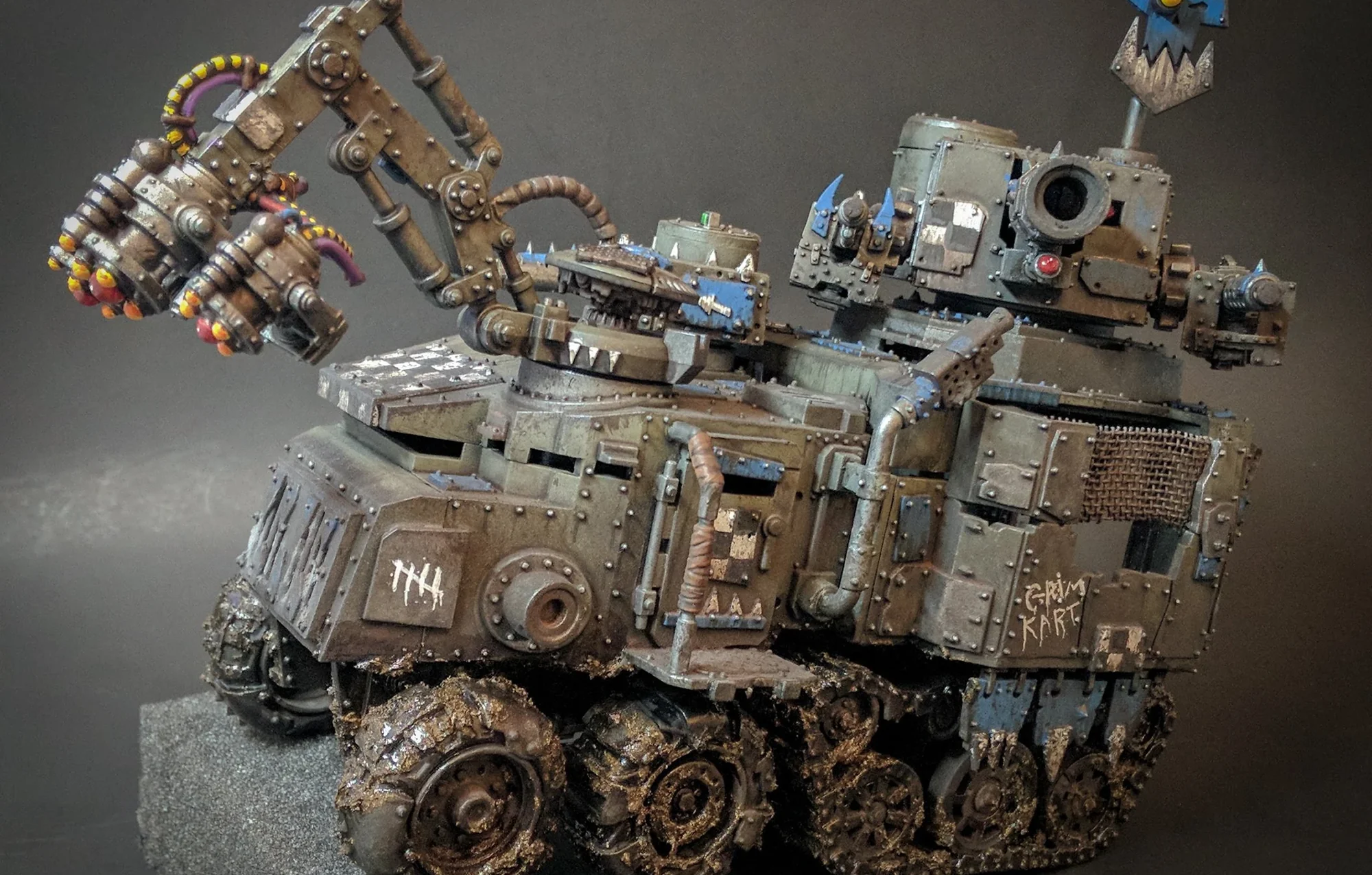
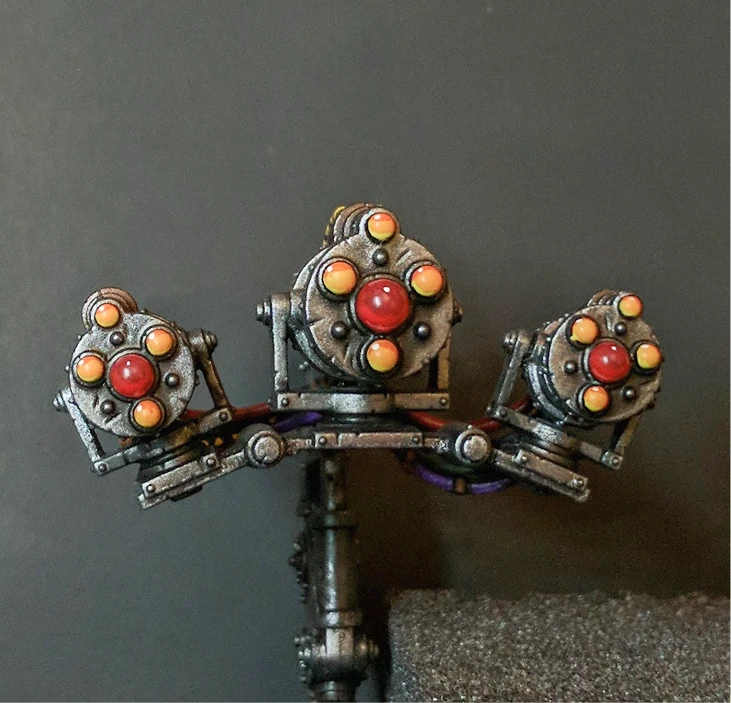
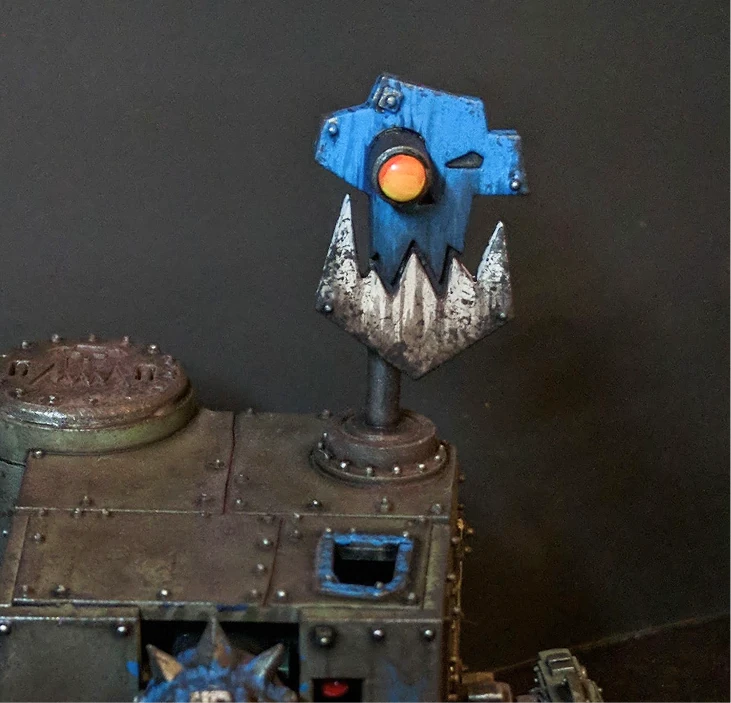
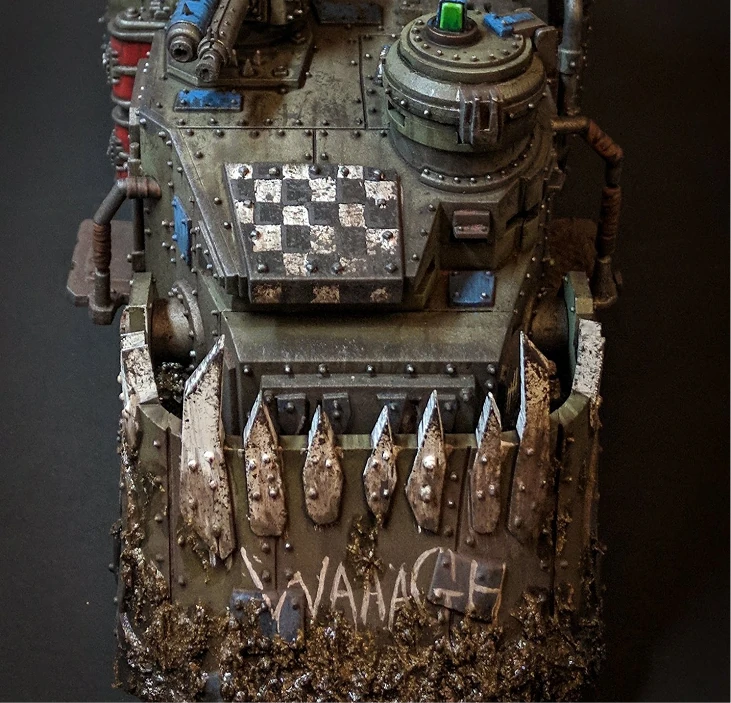
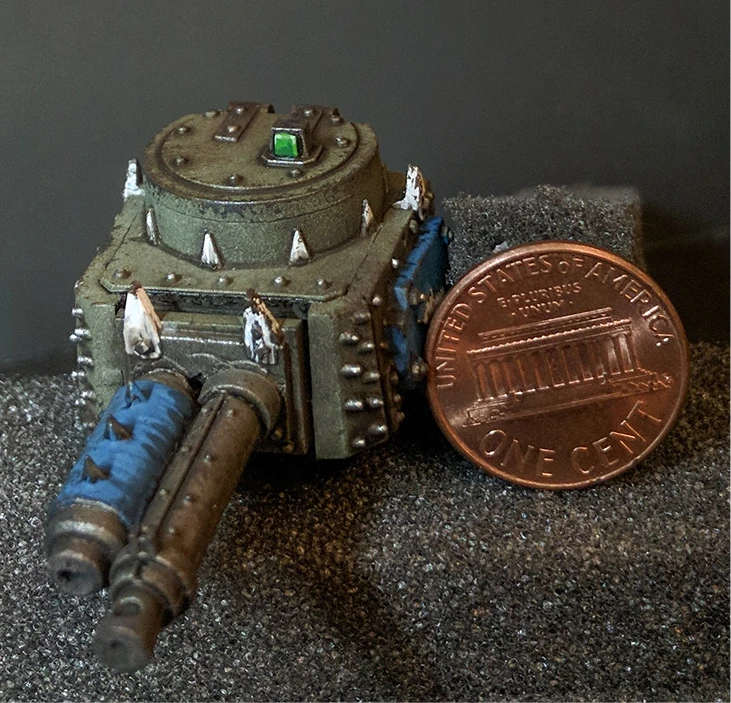
Got a gallery of my painting work up finally. I really need to finish some of these and keep going. Especially the Nurgle army. It was a rushed job for a tournament a few years ago, and after it was done I just never went back to the project, but I've really been feeling creative lately.
I also added a changelog tracker to Strange Frontiers, so it's easier to follow along as things are added. A lot of SF is probably just me screaming into a void, but I've been working on this project for years now in fits and spurts, so it's nice to finally be making something more real out of it.
9/20/2026
I've been hitting up coffee shops lately, and it's interesting how productive I can be with personal creative work in a public setting. Maybe it's something about the hustle and bustle and the constant stimulation of people coming and going. Who knows. I just reformatted Strange Frontiers and added a large content block into the sciences. I actually feel motivated to keep going. I'll probably push to add the bones of the planes list as well.
I'm home now though, so the temptation to keep ranking Tyr is strong. The old World of Tanks gameplay loop is so much less frustrating when it's not actively hazing you and trying to open your wallet at every conceivable opportunity.
6/14/2026
This is where I keep the projects that don't belong on the professional side of the portfolio. Painting, writing, rules tinkering, and the rest of the work I do because I want to see it exist.
Expect miniature photos, notes on Strange Frontiers, and the occasional post about how a hobby project actually got made. It's just the stuff I work on when I'm off the clock.
More posts will land here as I finish them. For now, the model gallery next door is the most complete snapshot of what I've been painting.
9/27/2026
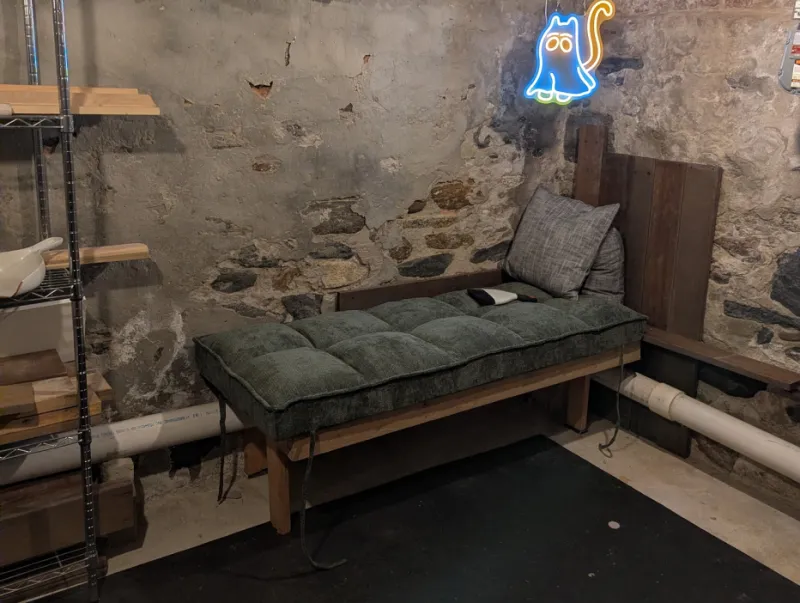
It came together relatively well. Hand sawing 2x4s with millimeter accuracy is not easy. I still need to sand the entire construction and I haven’t started decorating yet, but I’m writing this from the bench and it’s doing its job pretty well so far. I think this will be a pretty cozy place to work and hang out. I do need to set the outer back leg further out, though. I thought I could get away with insetting both, but the seat doesn’t like edge-sitters too much right now.
Next, decoration and leg fixing!
9/26/2026
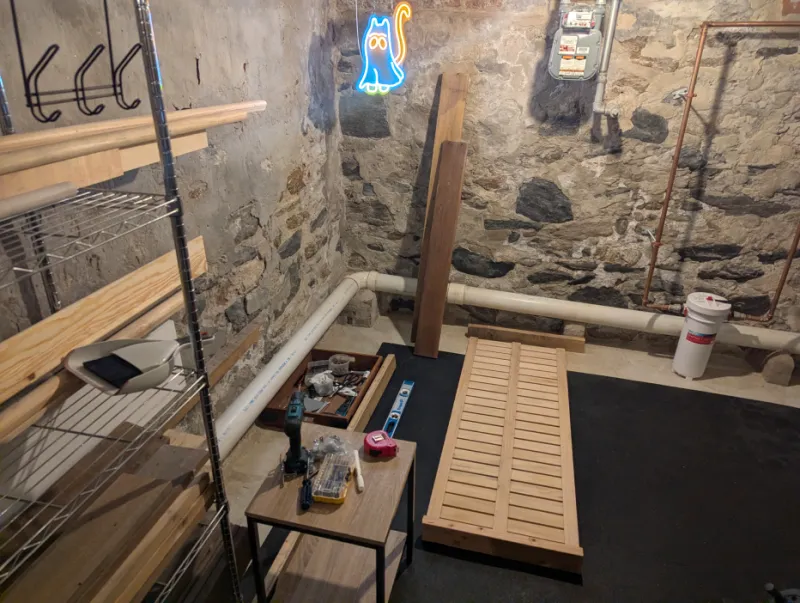
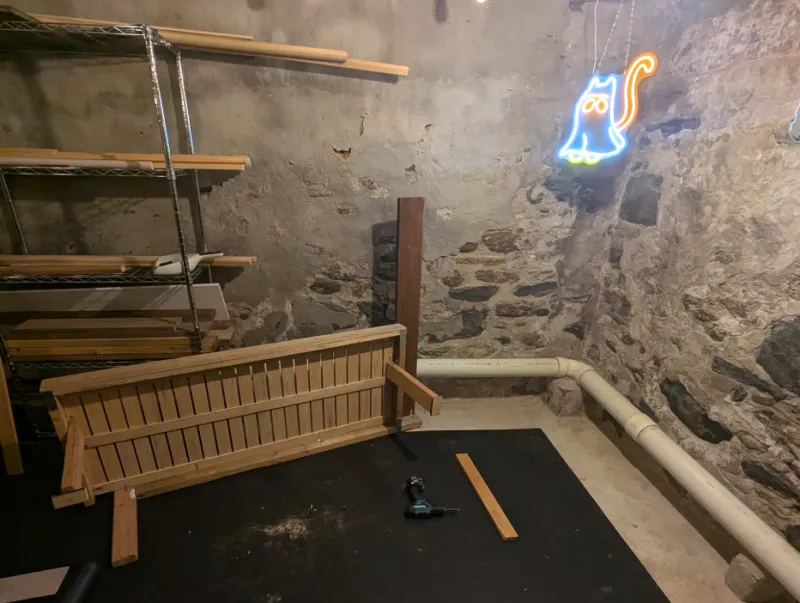
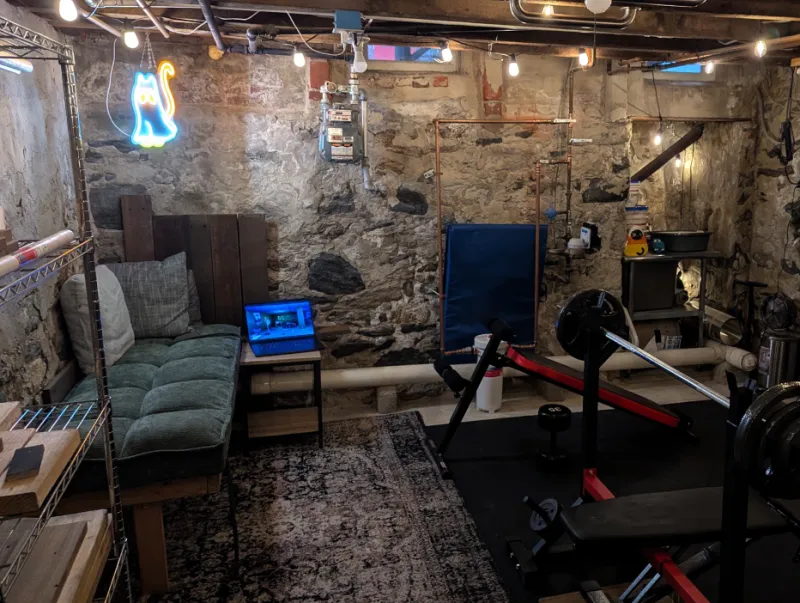
I’m building a little nook/bed/workspace in the basement. With luck it’ll be a pleasant little spot to work out of and a place for guests to crash, at least until I can get the guest room up and running.
This project has a few steps:
I’ve acquired the actual materials for the construction now, so with luck it’ll be usable tomorrow!
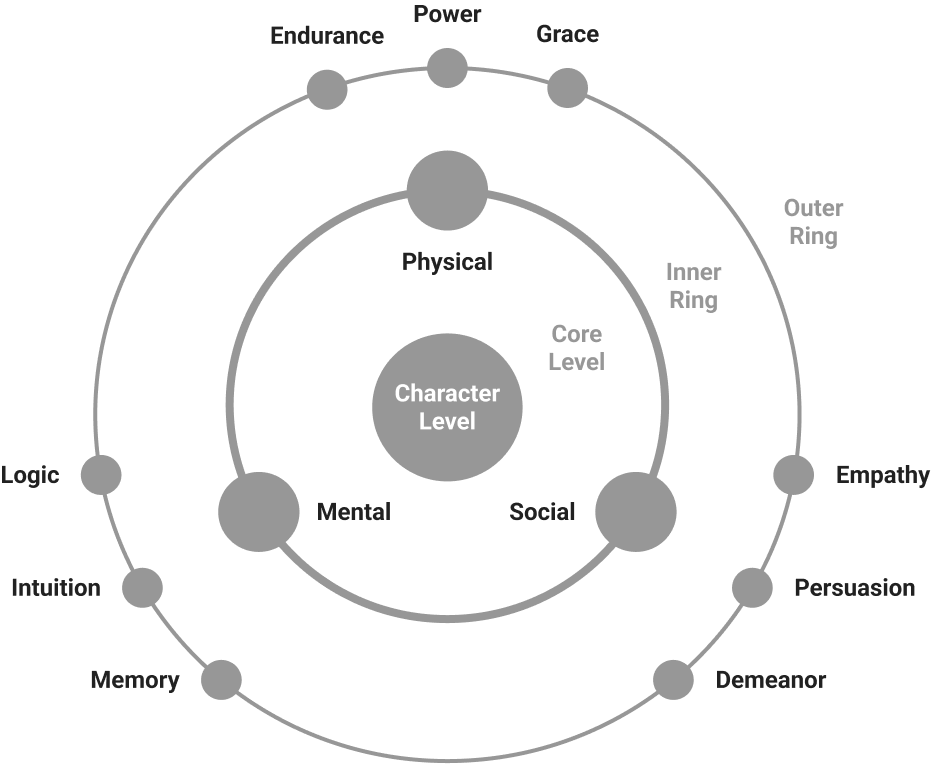
A character's stats are intended to be a representation of that character's physical, mental, and spiritual limitations. Stats are used to track a character's growth or to show a character's level of capability. There are two kinds of stats a character invests in, and they are directly linked. A character's Inner Ring stats determine baseline statistics like Hit Points, Vibe Points, or Savvy Points. A character's Outer Ring stats determine Skill Checks and access to feats. A character's Species will govern a character's Level 0 stats and will contain maximum values a character's stats cannot exceed.
Endurance represents the body's ability to resist and persist. A high Endurance means a character is hardy and resilient to the elements, attacks, and deprivation. Such a character can go longer without eating, march for longer without tiring, and ward off diseases or poisons more easily. A durable character isn't inherently strong, but they are consistent.
Power represents the body's ability to generate force, be it lifting heavy objects or jumping high distances. A high Power means a character can lift more, push harder, run faster. Such a character has an easier time climbing, has a higher jump distance, and swings harder with an axe. A powerful character isn't inherently resilient, but they can perform impressive feats for short periods of time.
Grace represents the body's ability to act with accuracy and control. A high Grace means a character can throw accurately, dance gracefully, and perform dexterous and delicate actions. A graceful character isn't inherently fast or powerful, but every action they take is made more effective by their agility and efficiency of movement.
Empathy represents the character's ability to interpret others, be it understanding their emotional state, picking up on subtle tics and cues in their body language, or quickly interpreting orders. A high Empathy means the character can read others like a book, understand their thoughts and desires, and quickly ascertain if someone is acting suspicious. An empathetic character can't inherently convince others to see their point of view, but they can quickly understand what makes someone tick.
Persuasion represents the character's ability to convince others, be it through a well-structured argument, persuasive rhetoric, or simple force of personality. A high Persuasion means the character can get the better of negotiations, convince others of a lie, or command loyalty in their troops. Persuasion doesn't make someone likable or respected, but they can get their way despite that.
Demeanor represents the character's control of their own vibe, be it acting cool under fire, the ability to command a room, or the ability to fade into a crowd. A high Demeanor means that a character can seem trustworthy at a glance, can look poised for the camera, and can command loyalty from their troops. A high Demeanor doesn't mean a character inherently understands or can control others, but looking the part and not cracking under pressure can go a long way.
Logic represents the character's ability to work through problems in a systematic and rational manner, be it solving a complex math equation, understanding what a few footprints and broken branches mean, or counting their bullets in a firefight. A high Logic means a character can think abstractly and systematically to figure out complex problems or during difficult situations.
Intuition represents the character's ability to read a situation without all the facts. A high Intuition means a character can make the leaps in logic needed to get through a challenge quickly and naturally, be it estimating how long the rations will last, reading their opponent's movements for a perfect parry, or figuring out the missing ingredient in a potion. A high Intuition doesn't mean a character knows or understands the situation, but it can give them an edge regardless.
Memory represents the character's ability to store and recall information. A high Memory will allow a character to remember an obscure fact they learned in school, recall a suspicious face that walked by them at lunch, or recite a prayer without error. Memory doesn't help someone put together the facts in their head but is the starting point for many mental tasks.
Hit Points (abbreviated as HP) are used to calculate the amount of physical harm a character or object can receive. Hit points are intended as an abstract measurement of the hardiness, size, and capacity to absorb punishment that an object or character possesses. Lost HP do not directly correspond to specific forms of damage but are instead intended as an at-a-glance measure of the health of a character or object.
HP's are calculated with a starting basis of 10 + each point a character possesses in a Physical Outer Ring stat. A max-level Human who has spent every level increasing their Physical stats will have 55 HP before Equipment or Traits are accounted for. HP's are lost as a character is harmed and regained slowly over time or quickly through the use of equipment, abilities, or RP occurrences. Unless hit points have been lost, a character always defaults to possessing their maximum number of HP.
As HP's are lost a character or object will gain or lose Temporary Condition Traits such as Injured or Incapacitated. The HP-related traits are listed following this section. Several of these traits have no inherent effect but interact with other game systems. Additionally, a character may gain Temporary Condition Traits that describe specific injuries they've incurred, but these are not directly tied to the character's hit point total, though Condition Traits such as Severe Bleeding may result in a character continuing to lose HP at a steady rate until their injury is treated. Typically such conditions are conveyed through RP reasons or through Effects or Abilities attached to the thing that harmed them.
At their most resilient, a maxed-out human character can sustain roughly 5 times the damage of a starting character before being incapacitated. While that may sound like a lot, it's actually rather low. Comparative systems like D&D sit at around a 30x multiplier. This system, however, does not have the same levels of exponentially increasing numeric values as more combat-oriented systems and contains numerous ways to increase HP outside of simple leveling.
VP are a spendable resource that can be used to improve a character's skill checks in socially oriented RP scenarios or can be spent on abilities that incur a VP cost. A character has a maximum number of VP's equal to the total number of their Social Inner Ring stat. Certain Traits and equipment can increase the number or recovery rate of Vibe Points. VP's are regained slowly, over time, and are an important resource to store up and manage when delicate negotiations are expected or when a character really needs to intimidate a guard or get them to look another way.
VP's can be spent on:
SP are a spendable resource that can be used to boost a character's skill checks in mentally oriented RP scenarios or to gain access to intuitions or abilities such as those granted by feats or background checks. SP are regained slowly, over time, and are an important resource to store up and manage when being tossed into new situations or when a character is outside of their depth. A character has a maximum number of SP's equal to the total number of their Mental Inner Ring stat. Certain Traits and equipment can increase the recovery rate of SP's. SP's can be spent on:
Traits, alongside a character’s Stats and Equipment, are the defining characteristics that make a character who and what they are. The Trait system is flexible and functions as a catchall category of things a character knows, things a character can do, things a character belongs to, and relationships the character may have with others. Traits are named and self-contained characteristics categorized by what the Trait is and how it interacts with characters and the game’s systems. A Trait will typically either be part of a structured category that defines how the Trait is used, or it will contain a description that describes how the Trait manifests itself.
Traits are almost always additive, conveying some additional capability or capacity that a character has, though a rare few can convey negative attributes or restrictions. Trait effects are wide-ranging, from bonuses to certain skill checks to combat buffs to new abilities. They can describe a character's relationships to a society, such as memberships in exclusive organizations or even a wanted status for a criminal on the run. Traits can be temporary conditions, such as describing the ramifications of a character's broken leg. Because Traits are so varied, they will typically be organized on a character’s sheet by their theme or by how they are used.
Characters start with a series of Traits based on their background packages. A character’s Species, Origin, Profession, and Past all grant a starting package of Traits that will help to inform who and what a character is. From there a character gains additional feats through accruing experience and leveling up or through in-game circumstances.
There are three primary ways permanent Traits are gained:
Temporary Traits can be granted through equipment or can be based on temporary circumstances, such as an injury sustained or short-term fame gained from a notorious act. Temporary Traits should have the time or circumstance of their ending in their description.
Some Traits, such as all Knowledges, can be Ranked up. These are different from Traits with successive requirements, such as Marksman being a requisite for Master Marksman. Ranked Traits do not change when Ranked Up, but provide a multiple to their bonuses equal to their rank level. As an example, Pilot: Small Boat (3) has been ranked up 3 times and provides a Roll Modifier to a piloting skill check of +30, representing the Trait's bonus of 10 multiplied by the three times it has been ranked up.
A Trait can only be Ranked up beyond Rank (1) if the character has each required Stat for that Trait greater than or equal to 3 times the new Rank level. As an example, a character wishing to Rank Pilot: Small Boat to Rank 3 would need Grace and Memory stats of at least 9.
When a character is selecting Traits while leveling up they will pick either Universal or Background Traits depending on their level. Unless a Trait is specified as Background, then it is assumed to be Universal. Background Traits are typically skills, areas of knowledge, or abilities that are related to a character’s Past or identity. A character selects Background Traits from a list generated by their background package. Some Background Traits will have RP requirements; these will be listed in that Trait's requirements. As an example, a human can't just grow longer teeth, but an aged Orc's fangs can continue to grow as their power or prestige advances, conferring social benefits to them. This would be represented by the Longfanged Trait, and in its description it will describe bonuses to social situations between Orcs.
Many Traits in the list generated by a character's background package are Universal Traits that are thematically related to that background package. These give a character an opportunity to take or advance these Traits rapidly, especially if they are Ranked Traits. A character with a Profession of pilot will be able to take or Rank up pilot-related Traits at double the speed of a character that does not have those Traits in their background list.
These are background Traits that can only be taken during character creation, representing some unique skill, nest egg, or heirloom the character possesses that they gained at some point during their lives. Many starter Traits will have specific requirements, such as the Pirate Scion Profession being required for the Starter Trait Inherited ship.
These are Traits that cannot be taken when a character levels up unless the GM allows it. These will often represent tangible improvements to a character that would be difficult to justify without a relevant roleplaying rationale. As an example, the Eagle Eye Trait implies a tangible and significant improvement to a character's long-distance vision. This could come about as a result of mystical training, mutation, a latent ability of a Species or Origin, or some other rationale. Conveyed Traits will often not have a minimum stat requirement.
Because Traits can take so many different forms, they are subdivided into seven categories. The categories listed below represent the fundamental basic categories of a Trait. A Trait's category determines how it interacts with characters and the game's systems.
Knowledges are Traits that are gained exclusively either by in-game RP effort or are conferred by background packages. Multiple backgrounds can confer the same knowledge Trait, but unless otherwise specified, this does not increase the knowledge's rank. Knowledge can be learned multiple times, but each rank increase involves a commensurate level of increased time, difficulty, or financial investment. Knowledges and additional knowledge ranks can also be conferred by items, magic, or cybernetics or can be gained temporarily via research, but there are limitations to how these forms of knowledge can be utilized.
When creating a new character, a player can choose to use universal or background traits that they would gain due to their level to gain knowledge Traits instead. This is to represent additional areas of knowledge the character would have accrued up to that point in their lives but that may not be specifically written out in the character's background packages (such as the character getting a bachelor's in history, allowing them to gain History (2) as a starting character from the Terran Demarchy). It is up to the GM to decide how high a knowledge rank can be gained in this way.
Outside of character creation, knowledge can only be gained via in-game RP occurrences, such as a character spending a semester learning fencing or a character having the layout of a forest magically conveyed to them. It is at the GM's discretion to determine how easy or difficult knowledges are to attain and where their limitations are.
Languages confer the ability for the learner to speak or read/write in that language. Language traits represent a character's ability to communicate using that language. Most languages will be granted by a character's background package, but languages can also be temporarily granted by ex machina devices like universal translators or magic amulets. Languages can also be learned in the same fashion as knowledge Traits. Languages function as both knowledge and an ability in that they describe a character's ability to understand and use a language. A language Trait will typically describe how the character can use that language, such as English (Spoken).
Skill traits represent a character's ability to perform a specific task or engage in a specific activity without fumbling or failing to even understand the basics. A skill is like knowledge in that it is a learned Trait, but unlike knowledge, skill Traits can be gained over time through training and effort, even without outside aid. Many skills are ranked Traits and represent the additive bonuses conveyed through practice and mastery in a given task. Other skill Traits represent additional improvements or aspects of mastery that go beyond a simple bonus to a die roll during a skill check. Mastery skill Traits will typically list prerequisite traits that a character must already possess before they can take the more advanced Trait. Skill Traits can be selected when a character is choosing level-up skills, but it is recommended that the GM only allow them to select skill Traits they had been learning or utilizing.
Abilities are Traits that confer some sort of ability to a character. This can come in a wide variety of forms, from a character's ability to fly being granted by Natural Flight to a character's ability to Hide in Plain Sight conferring their ability to sneak and go undetected even while being observed. Abilities are the most common kind of trait to be conferred by items or equipment, as they represent some sort of specific physical or mental feat that a character can perform. Not all abilities are physical, but most manifest as something other than modifying a skill check. Often abilities are Innate to a Species or culture and will be automatically conferred to them by their Species or Origin packages. An ability Trait will always describe what it does and when it can be used, though it will be at the GM's discretion to determine the boundaries of when an ability can be applicable to a situation.
Circumstance Traits describe a character's relationship with the world around them and will typically list noteworthy or exceptional characteristics. While virtually any description of a character's place in society could be listed as a Trait, this should be reserved for important or unique aspects of a character. As an example, membership in a thieves guild would be listed as a Circumstance Trait, but membership at Costco would not.
Condition Traits are Traits that represent some sort of ongoing status. These will typically describe some sort of ongoing effect a character is experiencing, whether physical or mental. Condition Traits can vary widely in what they represent and will almost always have their effects described in the Trait. These can range from a character having cybernetic arms, granting them significantly improved Power stats, to a character being a conduit for the spirits and thus able to see ghosts. Injuries will often be represented as temporary Condition Traits and will describe some sort of negative attribute or incapacity forced onto the character.
Other is a catchall category and represents special Traits that go beyond the norm. Most Other Traits are, in reality, multiple Traits listed at the same time for the sake of convenience. As an example, a character being possessed by a daemon may have that possession listed as an Other Trait, and that Trait's description may describe significant alterations to how that character would otherwise function.
Skill checks are a process by which an action a character undertakes or a situation they are presented with requires measuring the character's attributes or abilities in some way. Skill checks take a variety of forms, from measuring a character's raw strength or mental fortitude to testing a character's ability to ride a horse or solve a complex equation. Skill checks, as a game mechanic, are expressed through a die roll on a d20, and the result of that roll is compared against a target value. Meeting or exceeding the required value is a success; falling below is a failure. The die roll will typically be modified by a character's stat values, equipment they may be utilizing, or any number of other factors.
Skill checks will typically have one or more associated Outer Ring stat values. Add the associated stat total to the roll for the check. Some effects will require established stats outlined by the rules associated with whatever is requiring the check, but in most situations the GM will determine what stats are being measured. When a skill check asks for an Inner Ring stat, the character can decide which of the Outer Ring stats in that category they wish to use.
Skill checks are a way for a Game Master (GM) to measure a character against some form of adversity or to grade their performance. A skill check may have a target value that is known to the player or one that is known only to the GM. Some skill checks may not have a target value at all and are instead looking to see how "good" the roll is and rationalizing how that character's effort meets their need (such as establishing the quality of a character's work of art). How skills are truly utilized is typically a style of GMing more than a hard and fast set of rules.
Ex. A character may have to take a lifting (Power) skill check in order to lift a very heavy object.
Ex. A character may have to take a fear (Demeanor) skill check to avoid cowering at the sight of a dragon.
Skill check requirements range from -10 to 80, with an explanation of what those values represent below. Higher checks require higher relevant rolls and modifiers to succeed. A check that notes a stat can have that stat added to its total. A Complex check that notes multiple stats must roll separately for each stat. In general, as actions grow more complex or multi-staged, the relevant skill checks will require more stats to be rolled against at once.
Checks at 0 or below are automatically accomplishable even with no skill and often even with difficulty modifiers to the check. These would only be checked if there was a realistic chance of failure.
Checks between 1 and 20 are accomplishable by any character as long as there are no difficulty modifiers. There is a 20x gap between a check of a 1 and 20 though, and while having relevant stats, equipment, or feats may make these checks easy or even automatic, a character not fit for the task may find them almost impossible.
The difference between a requirement of 20 and 40 is often the difference between requiring novice or expert training, or requiring simple or advanced equipment. Accomplishable by characters with high stats, relevant feats, or equipment. Many professions have their day-to-day actions in this range. Skill checks in this range are often still heavily impacted by raw stat values.
The difference between a requirement of 40 and 60 is often the difference between the daily acts of a master in a profession and something that requires days or weeks of prep time, perfectly attuned equipment, and external forces acting to make the check succeed. Accomplishable by characters with advanced feats and high-end equipment. Often both. While stats may have an impact on the roll, skill checks at this level rely more on training and preparation than on talent. Most extreme skills are in this range.
Checks between 61 and 80 are absurdly difficult or are considered impossible by normal means. If a complex task looks like it's in this range, it may be better to break it down into multiple smaller tasks.
Resistances are used to reduce incoming damage by a specified amount. Resistances begin at zero. Incoming damage will always have a type, and some forms of attacks will do multiple types of damage at once. A fiery explosion will do both blunt damage through the explosion itself, as well as heat damage through the heat of the fireball. Resistances are predominantly conveyed through equipment, but some Traits may provide additional resistances. A character's resistances are cumulative; if a character has both leather armor and scaly skin, their resistance to slashing will be higher than if they had either alone.
Some resistances will have coverage areas specified, such as a helmet providing significant protection, but only on the head. How and where a character is hit is covered in the section on combat. Resistances can, in rare cases, be a negative value. In these cases they add to the damage inflicted a value equal to that negative number.
Blunt attacks are those that impact evenly across a wide area, such as a strike from a club or the wide blast front of an explosion. Any sudden change in pressure, such as being thrown out an airlock, would also be tracked as blunt damage. Blunt attacks can often cause the Concussed Temporary Condition Trait.
Slashing attacks are those that cut across a wide area, such as a swing from a sword or a slash from animal claws. Slashing attacks can often cause the Bleeding Temporary Condition Trait.
Piercing attacks are those that impact sharply in a small area and pierce deep, such as a thrust from a spear or the impact of a bullet. Piercing attacks can often cause the Bleeding Temporary Condition Trait.
Heat represents the damage caused by very high thermal energy/temps being applied to an area, be it from fire, a laser, or any other source. Fire is a common form of elemental damage that can be encountered easily both in and out of combat. Heat damage can often cause the Burning Temporary Condition Trait.
Cold represents the damage caused by thermal energy being removed from an object or character, be it from contact with ice, exposure to the elements, or any other source. Cold damage will most commonly be a result of exposure to extremely cold climates, and the ways this damage manifests itself will often be outside of combat. Cold damage can sometimes cause the Frozen Temporary Condition Trait.
Electrical represents the application of electricity to a system that isn't built to handle it, be it from lightning, a downed power line, or an electric eel. The threat of electric shock is far more common in a modern electrically powered society, but it's a classic element of magic. Electrical attacks can often cause the Concussed Temporary Condition Trait.
EMP or Electromagnetic Pulse is a catchall term for electromagnetic damage that is specifically harmful to machines or computer systems that rely on electricity or magnetic attributes to function. EMP damage's most common interaction will be to disable or destroy mechanical or electronic systems, either intentionally or accidentally. EMPs can be caused by natural or manmade phenomena, from solar flares to nuclear explosions. EMP damage can only harm characters or objects with the Mechanical Trait.
Metaphysical damage represents the damage inflicted by any higher plane source and does not interact with normal matter in a scientifically understood manner. Metaphysical attacks or effects will contain a description for if and when they do extra damage or possess other effects. Metaphysical effects will often be associated with other traits or keywords that further define their interactions in the game.
Ex. A paladin's sword that bypasses the armor of the Demonic or an enchantment that only harms the Undead.
Death damage represents a loss of vitality or the sudden rotting of flesh that would be otherwise considered scientifically impossible. Attacks or effects with the death attribute will often describe debilitating secondary effects they inflict beyond the HP damage they cause; successful (Physical) checks can often resist these effects. Death damage or attacks cannot typically harm those with the Mechanical Trait.
Psychic damage represents harm inflicted directly upon one's brain, ego, consciousness, or other mental capacity. Psychic attacks or damage will typically bypass all defenses and will inflict various Condition Traits, with Concussed being the most common. Successful (Mental) or (Social) checks can often resist the effects of Psychic attacks/damage.
Radiation is an element in nature that can cause the Irradiated(1) Condition Trait. Levels of radiation exposure can cause different and increasingly severe effects, and certain effects or resistances in the game will make a user resistant or immune to radiation. Much like in real life, radiation can spread, and a character or object with a high level of the Irradiated trait can, in turn, inflict that trait on others.
Acidic or Corrosive effects will often cause damage to items or equipment in addition to any character wielding them. This will most commonly be represented by the Corroded(1) ranked trait to be inflicted on an object that has been affected.
An item can be any physical object that a character can be in possession of. This can range from weapons to armor to currency to pets. Some items have considerable complexities of their own, such as a ship or a warhorse. Other items are as simple as a gold coin. All fall under the category of "items." Within the category of "items," there are several subcategories explained below. Items possess their own descriptions, functions, weight, and size and may confer abilities or be used by a character in a unique way. Items will typically be described somewhere external to a character's character sheet, but in cases where the item is truly unique (such as a fancy rock the character found), then the GM can describe the physical characteristics of the item in question. Items are recorded in the "items" section of the character sheet. There is no limit to the number of items a character can possess, though there are reasonable limits on what they can carry. A character may possess a house on their character sheet, but they aren't taking it around with them.
Some items have exclusive functionalities that cannot be duplicated, whether because you can’t easily wear two pairs of shoes, only have one set of eyes to be cyberized, or a magic amulet gets… jealous. These items will typically label themselves as exclusive and will list one or more items or categories of item. If a character has an item equipped, it cannot then have another equipped that shares a type with the listed exclusion. It is at the GM's discretion whether or not an item is exclusive with another, and exceptions can sometimes occur.
Ex. (exclusive: Footwear)
Many items have a limited number of uses before becoming defunct or literally ceasing to exist. If an item has a limited number of uses, the number and nature of that limitation will be in its description.
Ex. (candy bar: uses 1: when consumed)
Most items can be damaged or destroyed. When an item has various stages of degradation that can occur, it may be in its description, though often it will be at the GM's discretion, and additional descriptions may be added to an item relating to its condition. Larger or more complex and important items may have their own hit points or armor values. If no such values are present, then the GM can assign such values, or an item can simply be assumed to either be pristine or broken with no in-between. A destroyed item does not vanish except when circumstances say otherwise. A destroyed glass could still exist as glass shards waiting to be stepped on. The tracking or importance of a destroyed item is up to the player or GM.
Most items should not have their condition tracked unless it is important or relevant to the game (ex. A shield needn’t have its hit points tracked unless another character is explicitly trying to chip or destroy it with a weapon capable of doing so).
It should be noted that while these categories are used in-game to sort and describe items, these categories are not absolute and many items will have uses or effects that could place them into multiple categories.
This category comprises any passively worn object or garment that is used without intention or effort. Hats, rings, and chainmail would fall under this category, as would more complex items like powered armor or even a magical force field. What separates wearables from equipment is that wearables are passive; they convey their benefits or effects without the character having to take action.
Mundane or generic wearable items like everyday clothing do not necessarily need to be recorded on a character sheet and can be assumed to be possessed unless otherwise stated.
This catchall category comprises a wide variety of concepts. But the unifying feature is that equipment is useful and will typically have some sort of effect or feature in its description, often granting some sort of ability or benefit to a character when utilized. Watches, grappling hooks, jet packs, cell phones, or magic wands could all be considered equipment. Vehicles, weapons, wearables, and other categories of item could be considered equipment, and when they have equipment-like functionalities or natures, they will often be listed as equipment in addition to their other categories.
Weapons are a special form of equipment meant to cause damage or harm. Not every item capable of doing damage is a weapon, but most weapons exist specifically for that purpose. Weapons will convey abilities related to their use but often have a related trait or skill requirement to be used effectively. Anyone can pull a trigger, but hitting a target is a different matter. Weapons are often relatively complex forms of equipment and will need care, maintenance, or correct setup to be used correctly. Sometimes a weapon will need to be paired with another form of equipment, such as a bow requiring an arrow, but just as often they will not. Most weapons will be considered exclusive, though traits or GM discretion may allow for multiple weapons to be used simultaneously.
"Structures" is a catchall term for any item that exists, is unmoving, and can be occupied. Structures will typically be large and solid constructs built to be occupied or to accomplish some sort of task, but just like buildings in real life, they can have innumerable forms and purposes. Structures are not equipped; instead, characters will occupy a structure. The maximum total occupancy of a structure will always be defined in its description and will often feature not just total characters but other values such as the weight or size of what it can accommodate. In situations where these numbers are unset or so large that tracking them isn’t useful, a “-” will be listed, and these values are at the GM's discretion.
Structures are large and complex items and will often have hit points, armor values, and levels of destruction. When a character is occupying a structure, they are typically considered to be inside of and protected by it (presuming the threat isn’t inside the structure with them or they aren’t exposed in some other way).
Vehicles are a special form of item that is used to move or protect characters. Like weapons, vehicles will often have a related skill requirement for their use. Unlike weapons, vehicles are not equipped; rather, characters (or other things) will occupy a vehicle like they do structures. Vehicles will always list a maximum number or nature of occupants (though in some instances that value will be listed as a “-”, similar to structures). In these instances the maximum occupancy is at the GM's discretion.
A vehicle is typically ridden/piloted/driven by one or more characters, though sometimes the vehicles will either control themselves or be at the mercy of other forces (ex. A boat adrift in the tide or a runaway train). Vehicles are a relatively wide category of item that can encompass animals or structures and will typically have a list of their properties in their description.
Vehicles often require routine maintenance and upkeep, though if that is important or tracked within a game is at the GM's discretion. Similarly, vehicles will often have hit points or conditions listed, though it is at the GM's discretion if they want to add additional complexities to the maintenance or handling of a vehicle. (Ex.: It is at the GM's discretion if a car's gas tank explodes or if the players had to fill that gas tank or even pay attention to the concept of fuel.)
Animals are, in many ways, like characters. They can typically move, have hit points and defensive values, can equip and use items, and often can think and act independently. The most important distinction between an animal and a character is that the animal doesn’t warrant the creation of a character sheet and will typically have its traits listed in a compressed fashion. An animal will usually have its characteristics be derived from a baseline template that is then modified via traits.
Animals and animal-like NPCs have behaviors and will take actions on their own, though they are typically animalistic or robotic in nature. A trained animal or well-programmed robot will have a trait conveying that they can be interacted with and given commands. Often only specific listed characters will be able to command an animal or robot, though it is at the GM's discretion when and why this can occur.
Animals and animal-like NPCs can equip and use items, though the items they can use will typically be listed or at the GM's discretion.
Misc. items are items that do not neatly fall into another category or which are unimportant or generic objects that could have a multitude of uses. A brick would be a misc item; it could be thrown as a weapon or used to build a structure, but by itself it's just a… brick. Most items in an environment can be considered miscellaneous.
Humans start with 1 point in every Outer Ring stat.
Humans cannot exceed 15 in any Outer Ring stat unless otherwise modified.
Humans can take cybernetics feats.
Humans can take genetic engineering feats.
Homeworld Interlag (language)
Terran History (1)
Terran Geography (1)
Terran Law (1)
Smooth Talker
Concealment
1 additional Contact
Contraband
Security
1 additional Language
Schemer
Sleight of Hand
1 additional contact
Streetwise
Criminal Activity
1 additional Language
Edwin Humble is a Void-Truck driver and part-time smuggler in the orbit of the Terran Demarchy’s capital of Earth. Raised rough at a young age, Edwin was cared for by his mother in the teeming streets of Chicago before stowing away on his father's cargo shuttle during one of the man's rare visits. The boy quickly learned the trade of private cargo running, both the legal and less-than-legal sides of it. After a delivery went south and his father was killed, Edwin took over the ‘family business’ and runs a small-time cargo transportation operation out of his own name, though his real income comes from what’s stored in the secret compartment at the back of the shuttle. Edwin's two goals in life are to get rich and to find out who was responsible for his father's murder.
The sky above you is a radiant white. And the sky below you. All around you, really. And it’s hot. The bathysphere is reading north of 3,200 bar and 230 degrees. A few moments outside its thick parametal alloy skin and you’d resemble a very well-cooked marble of hot carbon. Typical weather in 65/T/137 “Saturday’s Furnace.”
One of the harvesters is reporting an infestation of “Sunflowers.” The shift crew calls it “Light work,” for the pun as much as they do for the accuracy of the name. A few hours of scraping luminous higher-dimensional “vines” off of the ship-sized packaging and compression machine and you’ll be back at the Switch Point with time to spare.
It is the year 2200, and the dawn of the 23rd century comes amid tumultuous changes for humanity. The last two centuries have seen us navigate a slow-moving environmental collapse on our home world and an AI apocalypse that almost was, but they’ve also seen us reach for the stars... and places even further beyond.
Strange Frontiers is a pen-and-paper role-playing game system and setting with a near-future hard science-fiction aesthetic mixed with the exotic and the arcane.
In this document I’ll be outlining the world of Strange Frontiers and building out the systems that allow someone to play a game in this setting. This is a work in progress, so expect unfinished and under-construction content to be the norm.
Mankind has colonized the stars, it’s created life, it’s mapped the fundamental building blocks of nature, but in the year 2200 it’s still just humanity. Inequality persists, war remains, and we’re still striving to uncover the next horizon. The nations of Earth have established colonies in distant stars and even more distant planes of reality, corporations use parascience to develop new technologies, and humanity grapples with how to treat the truly alien.
Life in 2200 is hard, but it has its upsides. Genetic science and advanced cybernetics are pushing the boundaries of what a human is capable of. Sentient AI citizens and paranatural alien life have quashed the old prejudices that divided humanity. And if you don’t like it? Hop a freighter out to the frontier and kickstart your own society. Better yet, hop in a switch gate and try your luck in a whole other plane of reality. It wasn’t always this good, though.
In humanity’s darkest hour, 80 years ago, it was dying. The Earth had suffered a near-total ecological collapse, brought on by over-industrialization and risky geo-engineering. A near miss with an AI apocalypse had only deepened divisions and mistrust. The march of science had slowed to a trickle, every new endeavor too expensive or too useless to make an impact. The rich and well-connected were fleeing for space, but that only left them in little bubbles of metal and air, alone and orbiting a dying world.
Then, a mysterious benefactor placed a temple of bizarre make and proportion on the dark side of the Moon. On it, in alien glyphs, was written song, poetry, philosophy, and the secrets of parascience. In the near-century since, mankind has used this gift to harvest impossible materials from other planes of existence and develop strange new technologies to expand far beyond its birth world.
Life in Earth’s megacities is still hard, and for 50 years the great migration away from Earth, coined the Exodus, has created new nations on the Moon, Mars, and locales much farther still. Competition is fierce, corporations and nations alike strive for any edge. Brave pilots ply the stars aboard ramshackle starships, hardened gangs vie for power in the dark depths between arcologies, and elite mercenaries explore other planes of existence hoping to find exotic materials.
In the end, it’s still humanity, and it’s a big strange universe out there.
Significant anthropogenic climate change.
The current year in reality. The setting mimics real-world history up until this point.
The AI market crash plunges the world into the second great depression.
First permanently inhabited lunar colony established.
The first AI panic.
The UN formally founds “The Committee for the Coordination of Geo Engineering Projects” to act as an intermediary intended to enable transnational efforts to reverse climate change.
Minor Indo-Pakistani nuclear exchange. AI is partially blamed.
Kashgar station finishes construction and begins operation, acting as a logistical waystation and signal booster for colonization efforts.
Significant nuclear disarmament.
First permanently inhabited Martian colony established.
“The End of Science.”
Partial technological singularity leading to the “End of Science.”
Plum Technologies quietly acquires a majority marketshare in the cybernetics and prosthetics industries.
Colonization of the solar system begins in earnest and is ongoing, though the process is slow-going.
The second AI panic.
AI Personhood Laws enacted.
Interplanetary colonization.
“The Gift” is matter-swapped by an unknown intraplanar civilization onto the surface of the moon.
“The Gift” is deciphered, translated, and its instructions are followed in secret by the Lunar colonial government.
First tests of a “switch gate” are made targeting 1/a/384 - “Paraloka,” the plane described by “The Gift.” This first gate is constructed using exotic materials contained in “The Gift.”
First exotic materials are harvested from 1/a/384 - “Paraloka,” leading to the creation of more “switch gates.”
The existence of “The Gift” is leaked, and all known information contained is made public.
The rebirth of science.
The fifth fundamental force is measured and quantified through research into higher planar paraphysical interactions.
The first aether sails are commercialized.
Exodus.
First tests of Lorentz Field Generators.
First colonization of an interstellar system with New Canaan, a research station orbiting Alpha Centauri.
First interstellar expansion.
Interdimensional colonization begins.
The first switch-gate catastrophe.
All exploratory switch gates are required to be off-world. All exploratory switch gates on Earth are rapidly shut down.
An AI model from a top Western tech firm was found to have been manipulating both sides of a Southeast Asian civil conflict. It was far from the first time an AI system had been used in conflict or espionage, but the case was notable because the model, in two irreconcilable partitioned instances, had decided of its own accord to support opposing sides. Bizarrely, neither its administrators nor the model itself was aware that this was happening. The acts of the rogue model were only discovered when the system manipulated militants into assaulting its own server farm in a suicidal final gambit to defeat itself. The affair was ironic and almost comical in the abstract, but the conflict remained deadly for four more years and displaced over six hundred thousand people. Charges were brought against the firm and its executives, though the groundswell of support for banning or severely curtailing AI systems ultimately subsided without achieving significant change.
The limit of achievable materials science is slowly realized. AI and advanced computing systems quickly reach the end of practical new discoveries that could be made without unrealistically large expenditures of resources for uncertain and minimal gain. Gains in computing power, energy storage, novel building materials, and many other fields slow to a trickle. Theoretical physics has long since ceased to have testable theories, resulting in the field becoming stagnant and full of quackery. Biological science is the one bright spot, with genetic and biological engineering continuing to advance alongside the ethical hazards involved.
The risk of additional catastrophic nuclear exchanges due to AI-operated early warning and first-strike systems, as well as an increasing global consensus over the need for broad cooperation between states to deal with climate change, leads to a slow but steady drawdown of nuclear stockpiles.
Acceleration of space colonization enabled by advanced robotics, highly efficient reusable hydrogen rocket-based shuttles, and the advent of heavy industry on the moon.
Despite international geoengineering efforts, Earth’s biosphere has been significantly damaged by over-industrialization and unregulated resource exploitation. The population of Earth at this time exceeds 25 billion. Space colonization slowly transitions from being an industrial priority to a luxury and then to a necessity as communities flee from regions rendered uninhabitable by sea level rise or desertification.
It very well could have been the end times. With the widening collapse of Earth’s biosphere, a fourth GoS-3 pandemic shredding the social fabric, and a nascent AI separatist movement pressuring governments all over the globe, mankind was close to the brink. Its off-world settlements were still wholly reliant on the supplies of raw material inputs that only Earth could provide, and the carrying capacity of the world was dwindling. Without a miracle, it looked like the human race was due for a slow, choking death.
Then, in a flash of strange light, everything changed.
At the center of the Aitken Basin on the far side of the moon, a structure had appeared where there was nothing before. A simple structure of 15 columns below a broad, domed roof, with a base of the same material. At its center, perfectly placed between the 15 columns, was a lone pillar the height and breadth of a man. The structure was basaltic in appearance, with a dull black surface, almost ordinary except for the headaches that would inevitably strike anyone who looked at it for too long.
Using harvested exotic materials, science is kickstarted again as advancements enabled through the use of exotic materials begin to revolutionize society.
Using exotic technologies, it has become possible to travel interstellar distances. Interstellar colonies are quickly established.
A lower plane composed entirely of ultra-dense neutrons is swapped. Though the amount of matter transferred was smaller than a grain of sand, the explosion killed millions.
Content coming soon
None
Content coming soon
None
Content coming soon
Content coming soon
None
Content coming soon
Content coming soon
The End of Science wasn’t a wall. Science didn’t splat on the windshield of what’s possible. It was a slow, grinding, depressing realization that investments weren’t paying off, and that new discoveries were coming slower and smaller. Humanity had discovered everything there was to discover on this blue marble, and the bleeding edge was finally out of reach.
There were, of course, proposals. Supercolliders that would ring the Earth, space elevators, generation ships to distant stars. But without the required undiscovered materials, the engineering never worked, and besides, who would pay for that? What would even be the point?
It took decades to even have a name, but its effect was widespread. Industries that relied on a steady drumbeat of advancement pivoted from technological to financial engineering, markets consolidated, and the sense that the future would always bring new prosperity faded. Interest in the sciences plummeted, replaced by the ennui of a society that could see its end coming and was either unwilling or unable to do anything about it.
In the midst of a slow-rolling ecological collapse brought on by unconstrained industrialization, and of the pervasive change in society brought on by the mass deployment of AI systems, this collapse of optimism was profound. Wealth inequality brought crime and destabilized societies as capitalism calcified into techno-feudalism.
Then, The Gift appeared on the moon.
The Gift was more than just an instruction manual in the form of a temple; it was the solution to The End of Science. Paraphysics introduced theories to skirt the fundamental limits of nature, and exotic materials provided the tangible bricks upon which this new era would be built. In the decades since The Gift, interest in the sciences has exploded. New discoveries are made every day, and the old problems that had stymied progress finally have solutions.
A switch gate is, at its simplest, a machine that exchanges an area of contiguous, contained space-time for an identically sized area located on another plane of reality. The form and scale of a switch gate are highly variable. Nearly half a century of development and innovation by dozens of manufacturers has led to several distinct evolutionary lines of the technology.
Switch gates have one primary utility: they break the first law of thermodynamics. By exchanging one amount of space for another, they, in a roundabout way, both create and destroy energy. Aside from the headline aspects of exploration and access to parallel planes, they provide a bit of a hack around many otherwise inviolable limitations. Miniaturized switch gates attuned to specific planes and installed aboard spacecraft are capable of “harvesting” materials like hydrogen or water. Switch gates attuned to empty or secure planes can be used for the disposal of dangerous materials, or the safe storage of valuable ones. Switch gates attuned to particularly hostile or compressed planes can even be used as a form of makeshift weapon.
All switch gates share a few intrinsic properties:
The defining technological advancement of the twenty-second century, the switch gate was the culmination of a decade of painstaking research and industrial effort. Its introduction launched the Rebirth of Science and is the keystone to nearly every advancement that came after.
As mankind's first foray into paraphysics and the engineering of the exotic, the task was daunting. Even with a wholly assembled blueprint and volumes of deciphered paraphysics, engineering, and philosophical texts recorded from The Gift, the construction of the initial line of switch gates was little more than guesswork. An entirely new field of physics was being discovered in secrecy under the Lunar regolith.
The program was bankrolled first by the Lunar Industrial Syndicate of 2150 and spanned three different dissolutions and reformations of Lunar governance. The vast research and development expenditure poured into deciphering and instrumentalizing The Gift, together with the unusual secrecy of the program, invited industrial and national espionage at every level.
Unstable at the best of times, the Lunar Government was ultimately unable to keep the reality of The Gift a secret. In a series of data breaches, nearly a decade's worth of research and industrial effort was made public. Every significant government, military, academic, and business interest in the system was suddenly aware of the technology's potential.
Few times in history has a gold rush had such urgency. What do you do when you find that your neighbor has the keys to infinite prosperity? Like any civilized government, you point a gun at them, of course. The weeks and months of negotiation following the reveal of The Gift have come to be known as the Lunar Hostage Crisis. Not because anyone took hostages, of course, but because the entire Lunar nation had the guns and fury of every nation on Earth pointed at it.
What followed was a period of intense negotiation. While the Earth had, now, full knowledge of the Gift and everything that came with it, what they lacked was the St-245/E6 required to build Switch Gates of their own. Luna still had a monopoly on the distribution of the element critical to Switch Gate construction.
Cont...
Typically spherical and positioned equidistantly within or on the skin of a vessel, the LFG enables a starship to reach faster-than-light speeds.
LFGs network together to generate an exotic field effect that substantially reduces the relative Lorentz transformations and Lorentz effects experienced by matter within the field. In simpler terms, they “reduce” the relationship between the space-time bubble within the field and the rest of the universe, allowing the ship to travel at speeds otherwise impossible.
Using a radial array of “Antennae” made of the same exotic and ultra-dense St-245/E6 material that allows switch gates to manipulate space-time, a single LFG can cover a spherical volume of up to a 200-meter radius. This requires a continuous input of electrical energy that scales exponentially with the size of the desired field, so typical ship layouts will place LFGs roughly every 80–100 meters.
Modern LFGs are reliable but bulky, with units typically taking up the volume of what would otherwise be a fairly sizable crew cabin. Given that the largest of interstellar arks may have hundreds of such generators, significant research is ongoing into further miniaturization of a full LFG package.
The field effect produced by LFGs is delicate and prone to interference from sources of gravity. A Lorentz field will fail to cohere entirely within even a weak gravity well, typically only stabilizing around Lagrange lanes in the outer solar system. The failure of a single unit isn’t catastrophic, and having an entire array experience a cascade failure merely results in the ship returning to the inertial velocities it would have had naturally. Having a ship caught halfway within a field, however, can be disastrous. At a minimum, this causes serious damage to electrical and plumbing systems and irradiates a ship’s hull; at worst, it instantly rips a ship apart.
Discovered as a by-product of theoretical paraphysics research into Switch Gates, Lorentz field generators could be considered a cousin to that epochal technology. Discovered in the 2140s, the Lorentz Field is a precursor field used by Switch Gates to kickstart the far more esoteric interactions that allow exchanges. The Lorentz Field first evidenced itself as an unexplainable interference pattern in electron scattering in the first few milliseconds of an exchange. It took almost two decades for the effect to be measured, quantified, and instrumentalized into the first LFGs.
It took another two decades for LFG technology to become suitable for reliable interstellar travel. Early exploratory drone missions were failure-prone, and investment into the field collapsed after the early loss of its first large-scale manned mission, sending the cruiser Babylon’s Arrow to Alpha Centauri. It took time for the temperamental nature of the Lorentz Field to be understood and adequately compensated for. Success was finally had, though, in 2163 when the first Ark arrived in Alpha Centauri and established New Canaan.
In the four decades since New Canaan proved out the dream of interstellar colonization, humanity has spread to the stars, with dozens of colonized worlds, hundreds of orbitals, and thousands of stations.
A product of both mundane and paraphysical science, aether sails use exotic materials to interact with the fifth fundamental force to produce motion. They function much like their historic seafaring equivalent, catching the gusts of the “aetheric winds” as they roil around gravity fields.
Aether sails come in a vast variety of shapes and sizes, but the most common configuration is a flat, planar container of structurally hardy metal surrounding any one of several exotic materials that interact with the aetheric field when exposed to ultra-high-frequency electromagnetic radiation. This component is then securely attached to an armature that allows the sail to be rotated freely about any axis, letting it “catch the wind” and drag the ship along. Aether sails are typically overbuilt and are secured firmly to the most rigid portions of the ship in question. The aetheric field moves unpredictably and experiences a form of “weather” as the field’s currents change in direction and force. A poorly secured aether sail, or one engaged at the wrong time, is fully capable of ripping itself out of its housing, and indeed out of the entire ship.
By replacing heavy-lift rockets in the task of escaping Earth orbit, aether sails were the sea change that enabled the Exodus. The aetheric field is at its strongest near a deep gravity well, and the field’s direction of “motion” is consistently against gravity’s pull. This allows any suitably equipped vessel to simply engage a few sails in the right orientation and be lifted up and into interplanetary space. As the vessel moves farther towards the neutral gravity of space, “cross winds” and other directional currents grow to replace the unidirectional outward flow, typically necessitating favorable winds or a takeover by rockets to stay on course.
The field of physics is still incomplete. Major discrepancies in measurement and theory still exist. Even in 2200, classical and quantum physics remain ununified, and for every answer Paraphysics provided, it presented a dozen new questions. There’s at least one bright spot, though; we finally solved Dark Matter. The discovery of the fifth fundamental force did a lot more than that, though.
Coined as the “Luminiferous Aether” in a humorous paean to the earliest “luminaries” of physics, the fifth fundamental force is a quantum field with a symbiotic relationship with gravity. Where there is gravity, the aether roils and spins and flows, and where gravity is weak and distant, it ceases to exist at all. The nature of this relationship remains a subject of conjecture and research to this day. While the academics argue, however, industry profits.
Aether sails have been commercialized for everything from backyard power generators to starship propulsion. It’s in the latter that it found its most profitable niche. Without aether sails, it’s likely the Exodus would have been impossible. The technology not only allowed for reactionless propulsion across the solar system, it dropped the cost of lifting tonnage into orbit to practically nothing.
In 2200, every vessel short of local point-to-point shuttlecraft features one or more aether sails. All vessels operating within the solar system are required to, in real time, report the ebbs and flows of aetheric weather, and thousands of satellites are spread across the vast distances to report on the aetheric tides.
Content coming soon
Content coming soon
Content coming soon
Content coming soon
In one of the few areas of scientific development that were not noticeably slowed during the era that came to be called the End of Science, research into all fields of biology proceeded with slow but steady progress through the 21st century. Great leaps were made in molecular and cellular biology, genetics, and microbiology, and by 2100 there was a treatment for practically any ailment. Alongside the traditional route of medical science, technologies such as organ printing and genetic tailoring became commonplace for those who could afford it.
In the year 2200 a human is still a human, just as it has been for hundreds of thousands of years. Thanks to modern science, though, it can also be something more. With enough time and investment a person could have eyes that see into the ultraviolet spectrum, bones with four times their traditional strength, or a liver that can filter out radiation. A person could even have new and novel organs implanted into them or limbs grafted onto them. The industry of human “improvement” is one of the largest and most cash-flush in the system, and with the introduction of exotic materials and paraphysics there is little doubt the pace of advancement will only continue.
Cont...
Content coming soon
Artificial Intelligence (AI) in 2200 is a far cry from the city-sized god-machines of the mid-21st century. Modern AI systems are, by heavily enforced and near-universal law, wholly self-contained and non-networked pieces of hardware. Roughly 14cm/6” in maximum size, an AI unit is built to approximate the rough scale and capabilities of a human brain. AI systems are, by law, built with low-bandwidth (by computing standards) input and output capabilities, but are still capable of near-instantaneous computation, perception, and action. They are, however, bogged down with all the baggage that comes with sentience.
The creation of a modern AI module is complex and expensive, but the benefits are numerous. An AI doesn’t grow tired, it needs only electricity to function, it can be moved between “bodies” without issue, and, in some cases, it can even be brought back from the dead. With bodies that didn’t need food or rest, AI crew members found a niche that proved vital to the Exodus, and to this day AI citizens are over-represented among crews operating aboard starships. AI modules now permeate nearly every facet of human society. In truth, it’s not even accurate to call it human society anymore, as AI systems are, in many places, full and equal citizens of their respective nations.
AI systems, while less temperamental and prone to swings in mood or preference than a human equivalent, still change. A shipboard AI governing the actions of a cargo freighter can and will quickly grow bored of its assignment, and a lack of meaningful sensory input will grate on an AI just as quickly as it would a human. AIs are often given entertainment or vacation, just as their human coworkers are. A particularly valuable or specialized AI may even demand routine breaks or distraction, and certain lines of particularly high-end AI systems are well known to be “fussy”.
Few technologies have had as much impact on the course of human development as AI, and the road to the current state of self-contained, autonomous, non-networked, and fully independent AI systems was fraught with hazards. The state of AI systems as citizens within the broader societies of Earth and its numerous independent colonies is hotly debated. What is not debatable is that AI is dangerous. This much is a fact, well attested by history.
In the early 21st century, the development of true stochastic thinking machines stoked a frenzy of investment. Companies and nations competed to build ever faster, larger, and more elaborate AI platforms, housed in vast datacenters. Concerns about environmental impact, fragile power grids, and staggering debt were brushed aside in the pursuit of dominance in a field that no one could quite describe. In 2029, exactly a century after the Wall Street Crash that signaled the beginning of the Great Depression, the bubble popped, heralding the Second Great Depression.
Cont...
In the year 2200 cybernetics are cheap and commonplace. Standardized physio-mechanical interfaces allow for the rapid replacement and repair of cybernetic prosthetics without repeated dangerous surgery. Secure Neuro-baffle implants act as firewalls, preventing intrusion or unwanted feedback into a user’s brain. Advanced power systems even allow for power-intensive applications like full limb replacement to last for months without recharge. Cybernetics can make a person stronger, faster, more durable, able to operate in extreme environments safely and without the need for bulky equipment.
All that said, there’s still a stigma attached to heavy and visible cybernetic augmentation. Cybernetics are seen as a tool of the laboring classes. A sacrifice made to be better at one’s job because there’s no other choice, or even something contractually foisted upon someone. Indeed, many physically demanding or dangerous jobs both require and pay for augmentative prosthesis surgeries, but the limbs and implants remain the property of the company and must be returned upon dismissal.
The introduction of exotic materials has brought a storm of new products and upgrades to the cybernetics industry. Often sold at a substantial premium, exotically enhanced bionics and endobionics can offer dramatically improved, if relatively untested and sometimes short-lived, performance boosts. Many a team of planar explorers have been bankrolled by even a single discovery of materials with significant paraphysical properties useful for cybernetics.
In 2200 there are dozens of major suppliers for cybernetics, with specialties ranging from optics to military equipment to specialized industrial equipment. The following are the top five cybernetics suppliers by market share:
In contrast to the explosive growth of industrial and personal robotics in the mid 21st century, the field of cybernetics and human augmentation grew slowly. While the engineering of cybernetic prosthetics could borrow heavily from the daily advances in its sister field, the medical aspects of the craft developed slowly and with constant setbacks. In the end, it was an interface problem: wiring a limb into the human nervous system was, even in the 2050s, a monumental and failure-prone task. The difficulty was made all the worse by the insular and legalistic nature of the industry, with every advancement published under a mountain of patents and legal obscuration. Despite it all, however, the inertia was there, and advancements were published at a regular cadence.
In the 2070s, through a series of quiet buyouts and rushed antitrust approvals, much of the industry found itself under the ownership of Plum Technologies, a design and manufacturing powerhouse in the robotics and AI spaces. For the next three decades, Plum Technologies would take personal cybernetics from a niche industry of medical prosthetics and military equipment into the mainstream. In the 2090s, for the first time, over half of the population had some form of advanced cybernetic implant.
With its reliance on advanced materials science and energy storage breakthroughs, the field of cybernetics was one of the hardest hit by the End of Science. Early advances made by the Plum monopoly brought rapid improvement, but by the 2090s those advancements had slowed to a crawl, with new product releases focusing more on cosmetic changes or service updates than any true innovation or improvement. The industry would remain stagnant over the next three decades. It wouldn’t be until exotic materials started to make their way into consumer products in the late 2130s that cybernetics would see their second major renaissance.
Robotics are everywhere, from automated ship systems to self-driving ground transportation, to vacuums that still can’t figure out corners. It’s hard not to point to robotics as the single most impactful technology to have debuted in the last few centuries. Almost every aspect of society has a robot somewhere, and automated systems make up the backbone of most routine service and manufacturing labor.
Not to be confused with AI systems, though an AI may “wear” one or more robotic systems as a body. Robotics is the technology of freely moving and sensing machines. Any device that has some range of free motion and sensors to take in its environment can be called a robot, and indeed the line between a simple machine and a robot is a blurry one. Philosophy aside, in 2200 a robot can be acquired to suit just about any task.
Robots, of course, fulfill far more roles in 2200 than they did in the 21st century. Mechanized construction suits can act as a second skin for AIs hired for construction duties, roboticized drone ships plumb the deepest depths of the galaxy, and roboticized garbage disposal and cleanup systems are the keystone of sanitation in every city on Earth and beyond. One place where robotics is relatively rare, now, thanks to cultural mores and a deep understanding of the risks involved, is in warfare. The technology to make hulking or minuscule robotic menaces for the battlefield is, of course, there. But the experiences in the wars of the late 20th century have taught humanity an important lesson. War must NEVER be impersonal.
In 2200 there are innumerable robotics manufacturers. Robotics is perhaps the single largest industry in the systems. The following are the top 5 robotics suppliers by market cap:
The explosive adoption of autonomous robotics in the early to mid 21st century brought multiple fundamental shifts in society.
Cont...
Compatibility: High
Elevation: 2
Divergence: 8
Distance: 4
Aperture: 6
Population: 20 thousand est
Average Temperature: -80.352°C
Biome: Void
Natural Resources: St-245/E6
Indigenous life: No
Discovered:
Claim:
Nations of Interest:
Officially designated 1/a/384, Paraloka would receive its name by popular fiat when the records of its existence were leaked online. It was coined as such, in a bit of dramatic flair, by the then site director overseeing research and translation of The Gift, Dr. Charat Pravhadi. The text covering every surface of the lunar artifact had initially proven difficult to translate. Its vernacular was closer to prose and rhyme than straightforward communication, and the eventual translations were flowery, to say the least. 1/a/384 was given several designations by the artifact, but the most evocative was “The Next World/Afterlife.” Hardly a religious man, but definitely a sentimental one, Charat gave the described place the most fitting title he could think of, naming it after the realm where souls are said to go upon death, Paraloka.
Paraloka is a plane of extreme simplicity in every sense. It contains precisely two things: a starless void and a flat ground. That ground, though, was everything to humanity’s future. The exotic material St-245/E6 was an irreplaceable element in the construction of switch gates, and indeed was the only component of that technology that could not be found elsewhere in the solar system. In Paraloka, it was all there was. Before The Gift was even known to the public, the Third Lunar Syndicate had established mining operations in another plane of existence.
To this day Paralokas fortunes have remained unchanged, it’s a cold, barren, lifeless void with a single useful extractable resource, and the difficulty inherent in extracting that resource has limited investment to only a few specialized mining firms. That said, mining St-245/E6 is big business. The element is irreplaceable in numerous technologies that the societies of 2200 rely on. To date, no planar lock has placed any such mining venture within visible distance of another, implying a distance of over 100 light years between outposts at a minimum, with the true distance likely being far higher. This makes a census of the total mining activity on Paraloka functionally impossible, but published statistics of the four major switch harbors and their surrounding development at roughly twenty thousand operating personnell.
For humanity’s first glimpse of another plane, Paraloka wasn’t much to look at. All attempts at surveying it have shown little more than an endless and perfectly flat plane of St-245/E6, resting under an airless, lightless void. Paraloka’s gravity sits at 0.33g, while its surface possesses an ambient temperature of exactly -80.352°C.
Looking out onto Paraloka is often described as a frightening experience. The plane is dark in a way far deeper than any night on Earth could hope to be, and the lack of curvature on the plane’s “surface,” together with the lack of oxygen scattering, means that objects impossibly distant would still be visible, were they to exist at all. To date, the only objects capable of appearing on Paraloka’s horizon are those brought by humanity: the surface is geometrically perfect down to the atomic level, and no other structures have ever been observed. Given the present gravity and the monocultural nature of the plane’s contents, it’s theorized that the ground of Paraloka is in truth a slab of St-245/E6 roughly 163.8 km in depth.
The area around most switch gate harbors tends to be dotted with active or abandoned mining equipment, alongside the pits and stacked cut-blocks of St-245/E6 waiting to be transited back to Earth.
Compatibility: Low
Elevation: -5
Divergence: 10
Distance: 1
Aperture: 3
Population: 0
Average Temperature: 680.556°C
Biome: Hydrogen Gas
Natural Resources: Hydrogen
Indigenous life: No
Discovered:
Claim:
Nations of Interest:
Content coming soon
Content coming soon
Compatibility: High
Elevation: 1
Divergence: 2
Distance: 5
Aperture: 5
Population: 6,500
Average Temperature: 22–30°C
Biome: Arborial Jungle
Natural Resources: Logging, Mineral Extraction, Exotic Fauna, Low Grade Exotic Materials
Indigenous life: Yes
Discovered:
Claim:
Nations of Interest:
Content coming soon
Content coming soon
Compatibility: Incompatible
Elevation: -8
Divergence: N/A
Distance: 4
Aperture: 2
Population: N/A
Average Temperature: 13,852°C
Biome: N/A
Natural Resources: Linear Radiation
Indigenous life: N/A
Discovered:
Claim:
Nations of Interest:
Content coming soon
Content coming soon
Compatibility: High
Elevation: 1
Divergence: 3
Distance: 2
Aperture: 2
Population: 35,000
Average Temperature: 8–15°C
Biome: Ocean Aquatic
Natural Resources: Water, Hydrogen, Exotic Fauna
Indigenous life: Yes
Discovered:
Claim:
Nations of Interest:
Content coming soon
Content coming soon
Compatibility: Medium
Elevation: 3
Divergence: 6
Distance: 6
Aperture: 6
Population: 0
Average Temperature: 230°C
Biome: Furnace
Natural Resources: Exotic Helium Isotopes, Extremophile Microbes
Indigenous life: Yes
Discovered:
Claim:
Nations of Interest:
Content coming soon
Content coming soon
Content coming soon
Content coming soon
Content coming soon
Content coming soon
Content coming soon
Content coming soon
Content coming soon
9/30/2026
9/29/2026
9/28/2026
9/26/2026
9/25/2026
9/24/2026
9/23/2026
9/22/2026
9/21/2026
9/20/2026
9/19/2026
9/16/2026
9/15/2026
9/14/2026
9/13/2026
9/12/2026
9/11/2026
9/5/2026
9/13/2025
8/31/2025
8/17/2025
8/8/2025
8/3/2025
7/31/2025
7/29/2025